










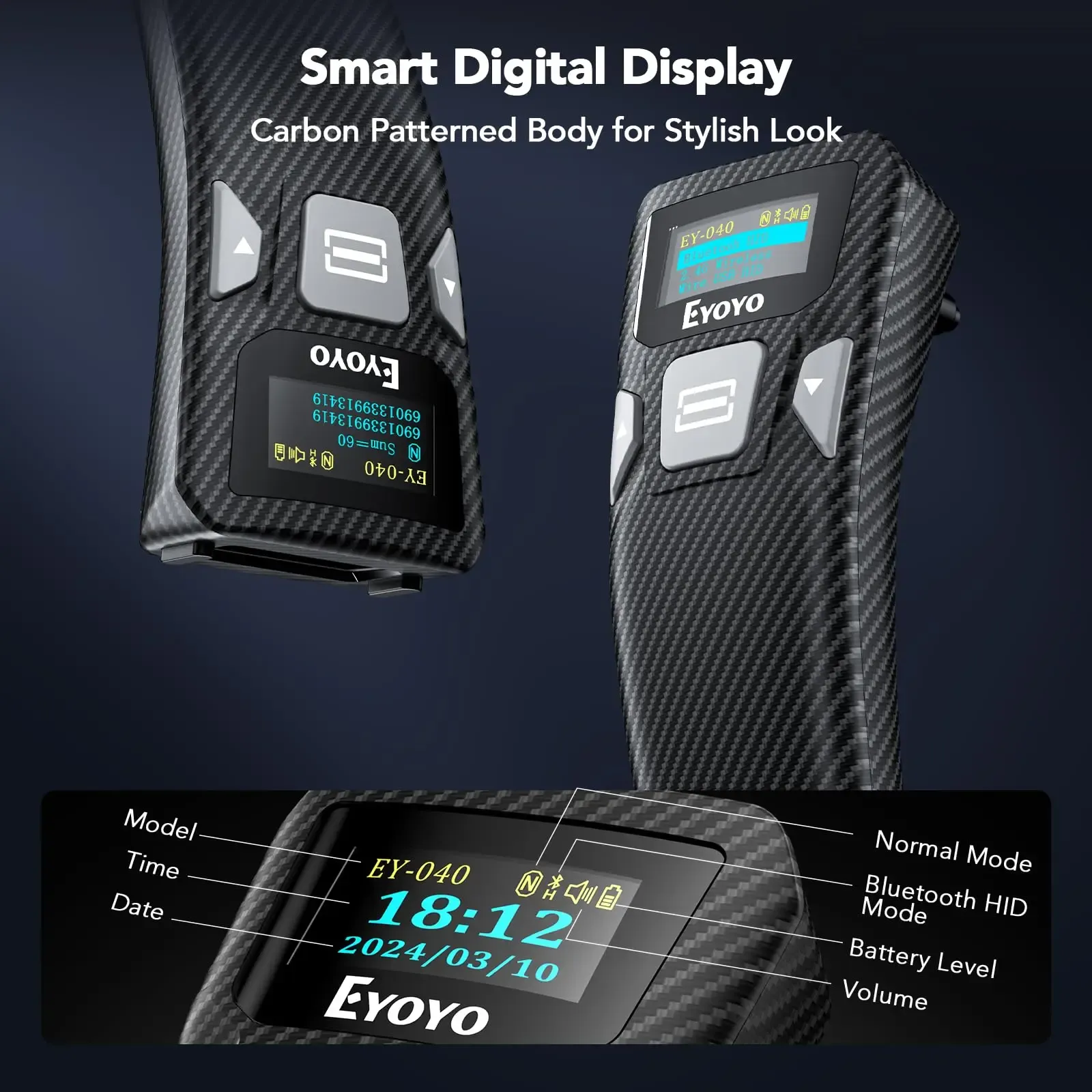
Smart display control that removes guesswork
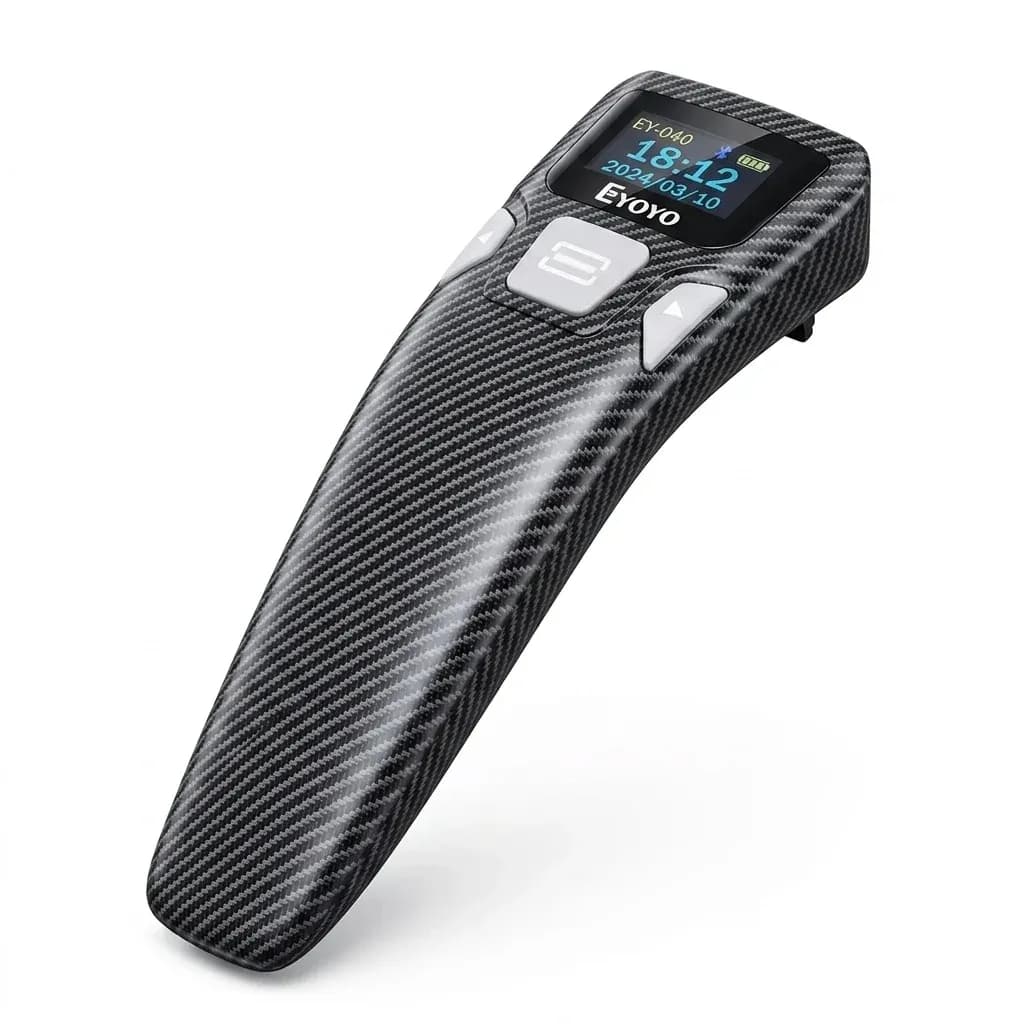
The main problem this scanner solves is simple: you want fast barcode capture without stopping to wonder what mode the device is in. Its digital display shows battery level, connection status, and scanned data, so you can confirm the result before it reaches your spreadsheet or POS system.
That screen also reduces setup friction, because key settings can be handled from the device instead of relying on a long chain of manual scans. For users who switch between stock checks, shelf audits, and mobile scanning, that kind of visibility matters more than raw speed, so what does the scan engine bring to the table?
1D and 2D decoding for mixed retail and warehouse work
This model is built for both classic 1D labels and 2D codes such as QR, Data Matrix, and PDF417, which makes it useful in AliExpress Electronics workflows where product labels, coupons, and screen-based codes often sit in the same job. The advertised 100 scans per second is less about theatrical speed and more about keeping the hand motion smooth when you are moving through a stack of items.
Users say it reads quickly and reliably, including from smartphone screens, which is a practical advantage for digital loyalty cards and mobile vouchers. If your current scanner struggles with dim stickers or reflective displays, the next question is whether the connection options fit your setup.
Bluetooth, USB, and 2.4G flexibility in one handheld body
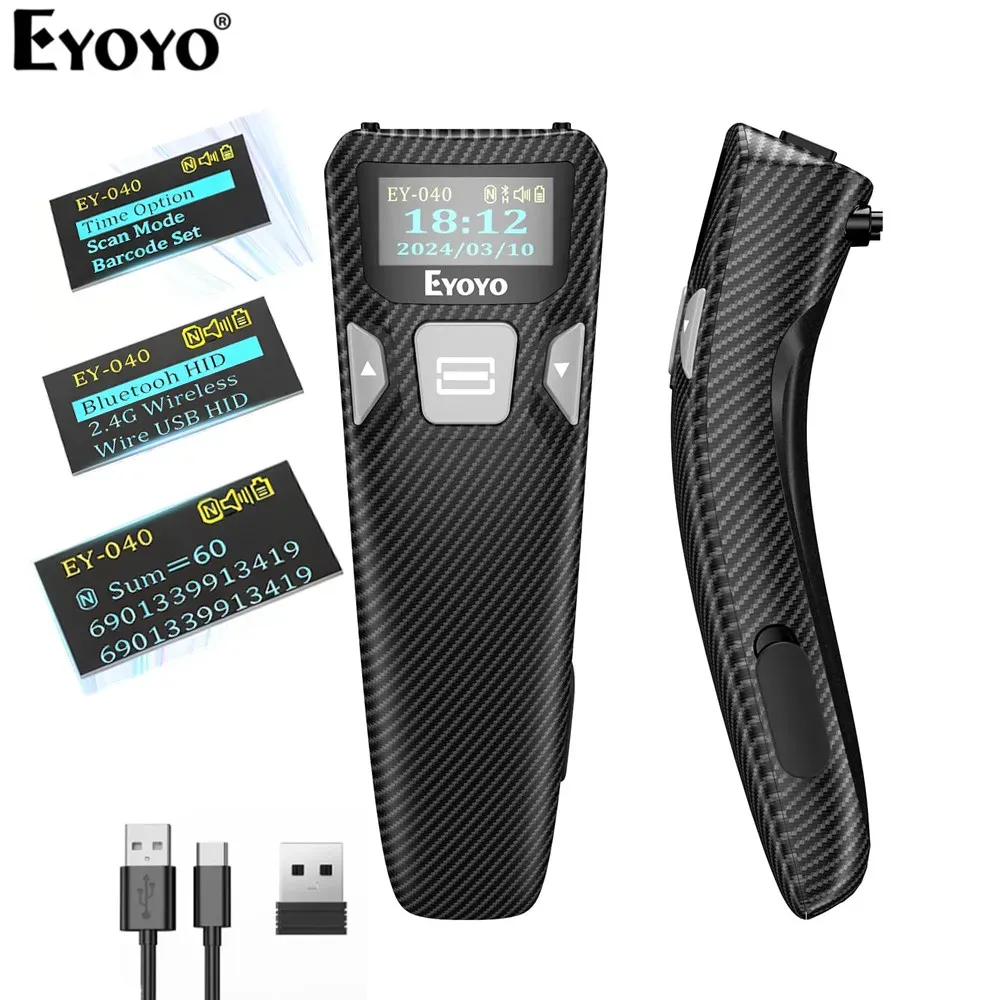
The three-way connection approach is the strongest part of the hardware package, because it lets the scanner move between laptop, desktop, tablet POS, and phone-based workflows without feeling locked into one desk. Bluetooth is the most convenient for mobile use, while USB still makes sense when you want a stable wired link and zero pairing concerns.
That flexibility is especially useful for small shops and home inventory stations where one device may need to serve several endpoints during the day. The included 2.4G receiver slot design also helps keep the dongle stored with the scanner, which is a small but meaningful detail for people who misplace accessories easily.
Prefix and suffix tools that make data cleaner
Custom prefix and suffix support is the feature that turns this from a basic reader into a workflow tool, because it can send structured data directly into software that expects fixed formatting. Keyboard keys such as CR, LF, TAB, and CR+LF help the scanner behave like a disciplined input device instead of a loose text source.
That matters when you are feeding inventory systems, order forms, or serial logs, since one misplaced character can slow down an entire batch. The ability to hide characters or switch between upload and storage modes gives it more depth than many entry-level handheld scanners, and the battery story is just as practical.
Battery life built for long sessions, not short demos
The 1200mAh battery is rated for over 20 hours of continuous work, with USB-C charging taking about 2.5 hours, so this is a scanner designed to stay in rotation through a full shift. A physical power switch also helps preserve charge, which is useful when the device lives in a bag between jobs.
In daily use, that combination should appeal to library counters, small stockrooms, pop-up sellers, and anyone who scans in bursts rather than at a fixed desk. The compact carbon-fiber-style shell keeps the body light in the hand, but there are a few limits worth knowing before you commit to it.
Where it fits best, and where it does not
For mixed barcode work, this scanner looks strongest in small business inventory, retail receiving, and mobile point-of-sale tasks where portability and formatting control matter. According to customers, the device feels practical and efficient, and the digital display is the detail they notice most because it confirms data before transmission.
The trade-off is that the spec sheet mixes several optical claims, so buyers who need enterprise-grade imaging depth or hardened industrial sealing should look higher up the stack. If your priority is a compact scanner with real workflow control rather than warehouse-heavy ruggedness, this one is easier to justify than a plain entry model.