















Clear monitoring without crowding the stage
The ANLEON S2 receiver solves a familiar live-sound problem: how to give performers a stable monitor feed without adding floor wedges or extra cable runs. For small venues, rehearsal rooms, and church stages, that means a cleaner setup and fewer points of failure.
Its job is simple but important, because the receiver is the part the performer lives with during the set. The built-in battery, LCD readout, and compact bodypack format make it feel like a practical tool rather than a fragile accessory, which matters the moment a show starts moving fast.
What the UHF band gives you in real use
This unit is designed around UHF in the 526-535 MHz, 561-568 MHz, 670-680 MHz, and 863-865 MHz ranges, with the listed model focusing on 561-568 MHz. In practice, that gives the system room to work in environments where wireless coordination matters, especially when several performers need their own mix.
The receiver supports six selectable channels and up to six simultaneous systems, which is useful for bands that want separate monitor feeds without jumping to a much larger platform. Users who leave feedback describe it as fast and convenient, but one review also notes that transmitter matching matters, so the receiver works best when paired with the intended ANLEON transmitter.
Why the display matters during a performance
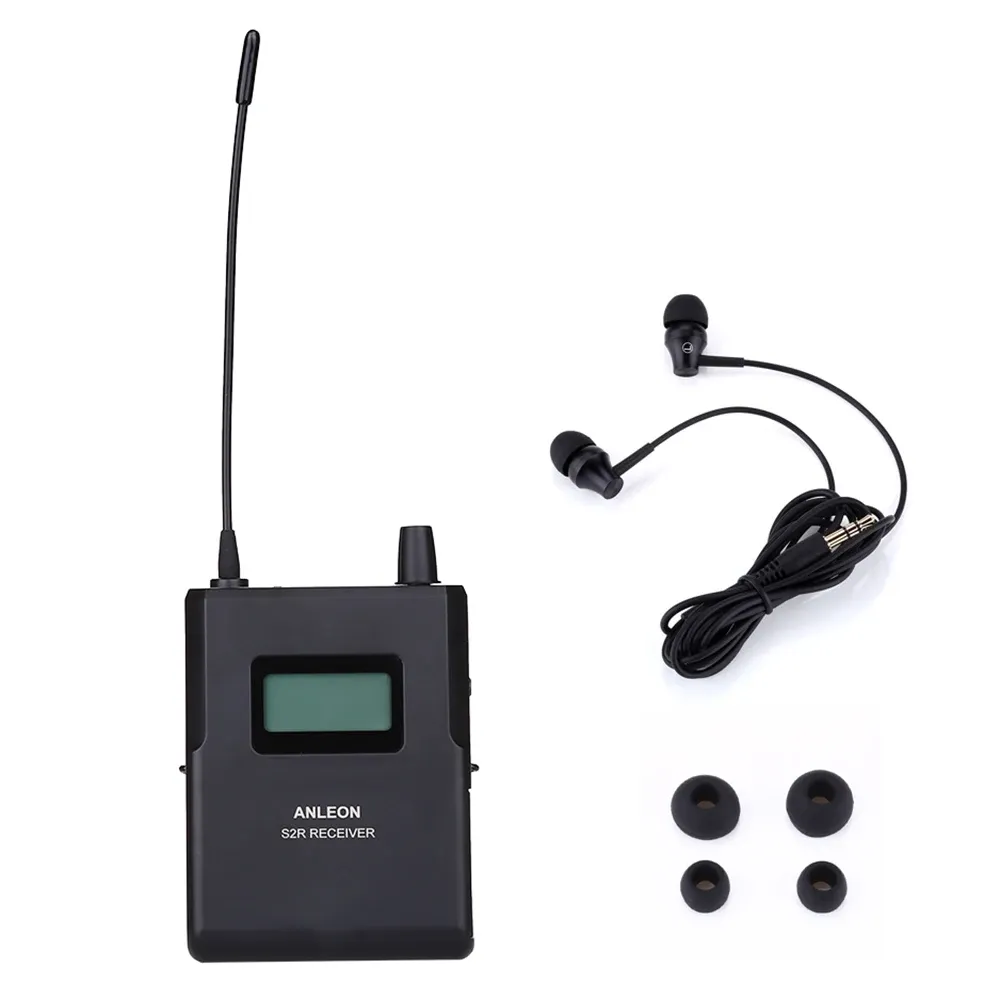
The LCD is one of the most useful parts of the design because it shows frequency, channel, and battery level at a glance. That reduces guesswork on stage, where a quick battery check can be the difference between finishing a set comfortably or dealing with a silent pack halfway through.
Compared with simpler analog bodypacks, this kind of readout gives more control to the performer and the monitor tech. It is especially helpful for musicians who swap packs between songs or use the same system across rehearsals and live dates, because the status information is always visible.
Sound behavior and channel coordination
ANLEON describes dynamic expansion circuitry for a higher signal-to-noise ratio, which points to cleaner monitoring with less background hiss. That is the sort of detail that becomes noticeable in quieter passages, spoken cues, or when an in-ear mix needs to stay intelligible at moderate volume.
The ability to run multiple receivers on the same frequency also makes this receiver more flexible than single-user wireless kits. If you are building a shared monitoring rig for a small band, that feature can simplify coordination, but it also means the transmitter side needs to be equally compatible and properly configured.
Who this receiver fits best
This is a sensible choice for performers who already know they want an S2-based system and need an extra receiver or a replacement unit. It is less attractive as a universal solution, since one user reported incompatibility with non-matching transmitters even when the frequency range looked right on paper.
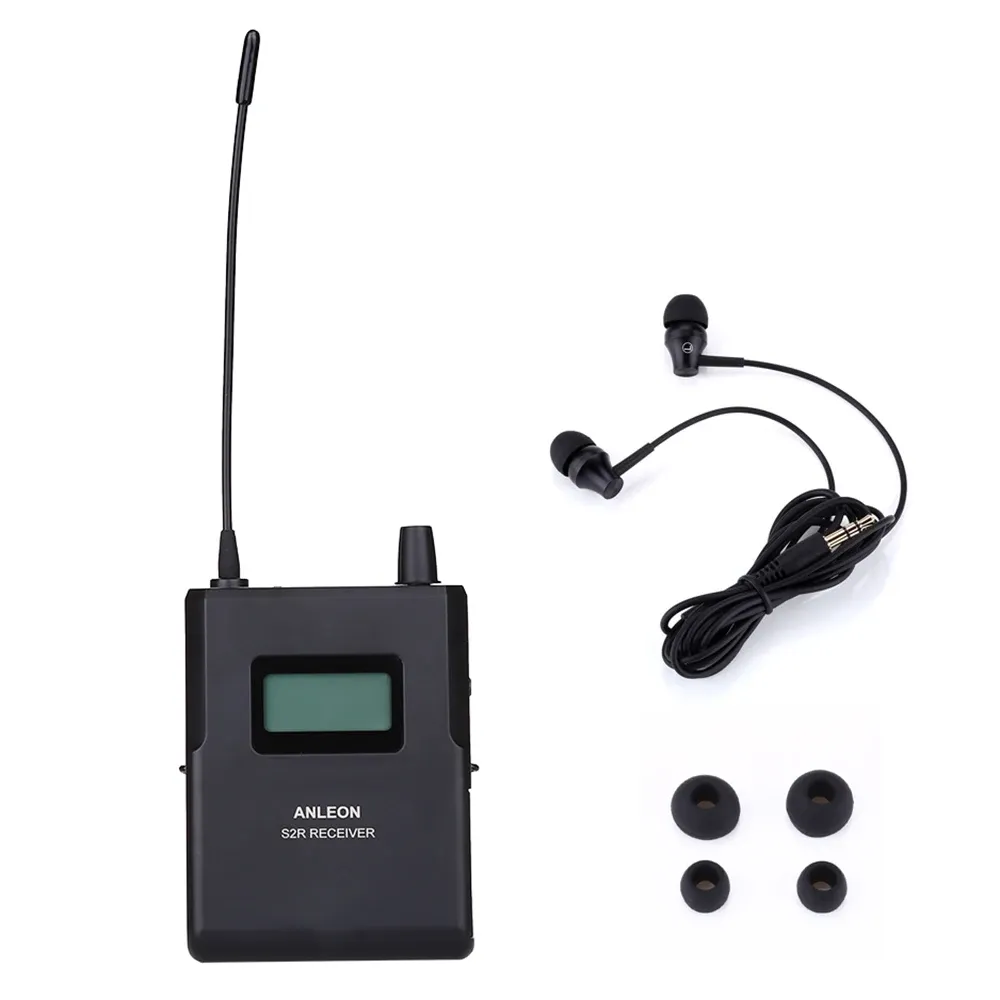
For buyers comparing it with generic UHF bodypacks, the main advantage is system alignment rather than broad interchangeability. If your setup is built around the same family, the receiver is straightforward and economical, which is why it makes sense for stage teams that value consistency over experimentation.
What the review pattern suggests
Real AliExpress feedback is limited but mostly positive, with an average rating of 4.8 out of 5 from eight reviews. The comments point to good first impressions and quick delivery, while the single negative note is a useful reminder that wireless audio gear performs best when all parts of the chain are matched correctly.
That pattern makes the ANLEON S2 Receiver look like a focused tool rather than a universal one, and that distinction is important when choosing monitor gear. If your setup already speaks the same wireless language, the receiver offers a neat path into personal monitoring, so what should you check before pairing it?