












One cable in, four wired devices out
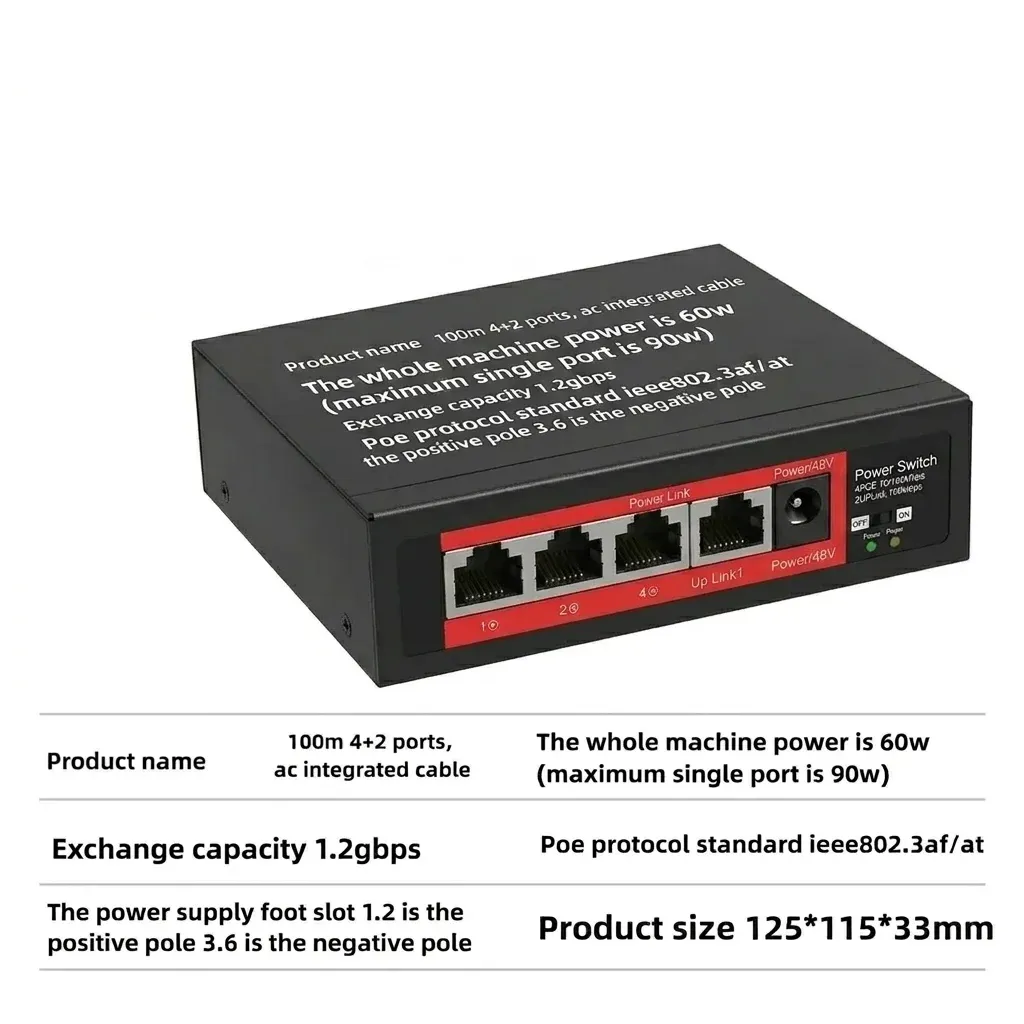
This Dahua 48V PoE splitter switch solves a familiar surveillance problem: too many devices, too few clean cable runs. It takes a powered Ethernet feed and turns it into a small desktop-friendly hub, which is useful when you want to keep a CCTV corner tidy without adding a full rack switch.
The appeal is not raw speed, but simplicity. For camera clusters, education networks, and small monitoring setups, that means fewer adapters on the desk and less clutter behind the monitor, which is exactly where these installations tend to become messy.
Fast Ethernet is enough for surveillance traffic
The unit uses Fast Ethernet rather than gigabit links, and that makes sense for most IP camera workloads. Video streams, control packets, and basic network management rarely need more bandwidth than 100 Mbps per port in this class of deployment.
That choice keeps the hardware focused on stability instead of headline numbers. If you are building around Hikvision or Dahua cameras, the practical question is whether the switch can carry steady traffic without fuss, and this format is built for that kind of job.
48V PoE compatibility and what it changes in practice
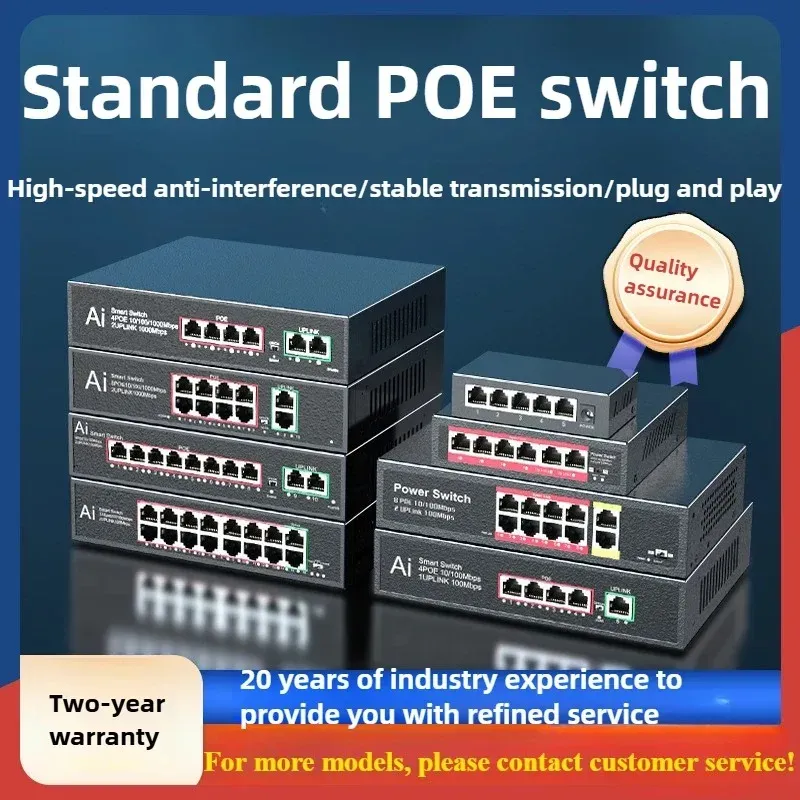
Because the device is designed around 48V PoE, it fits into the same power ecosystem used by many surveillance systems. That can reduce the need for separate power bricks near each endpoint, which is a real advantage in ceilings, cabinets, and classroom installs where outlets are limited.
The benefit is cleaner placement and easier maintenance. Instead of tracing multiple adapters, installers can work from a single powered feed and distribute it where needed, which is one reason this style of unit remains popular in AliExpress security builds.
Desktop form factor for fast deployment
The desktop installation format makes this model easy to place on a shelf, under a desk, or inside a low-profile network cabinet. It is not meant to disappear into a wall box; it is meant to be reachable when you need to inspect ports, swap a camera, or test a line.
That accessibility matters during setup, especially in small offices and education network rooms. Users who want a straightforward hub with minimal mounting work will appreciate the no-nonsense layout, and the CE, FCC, and RoHS certifications add a reassuring layer of compliance.
Where it fits best in a real installation
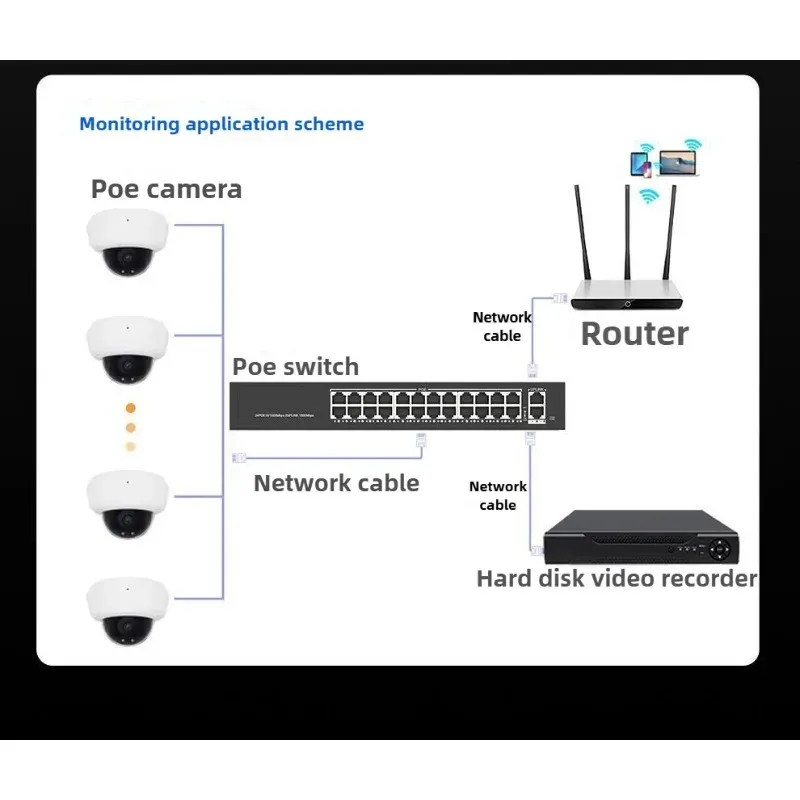
This is a stronger match for compact surveillance systems than for high-throughput office switching. If your setup centers on a few cameras, an NVR, and a short cable path, the HG-6006FP gives you a neat way to extend wired connectivity without overcomplicating the rack.
Real customer feedback is limited, but the available review is positive and notes that the item arrived as described with quick shipping. That does not prove long-term endurance, yet it does suggest the product matches its listing closely, which is often the first test these devices need to pass.
What to check before you connect it
- Confirm your upstream PoE source delivers the 48V output this unit expects.
- Use it with Fast Ethernet endpoints where 100 Mbps is sufficient.
- Plan for desktop placement rather than concealed in-wall mounting.
- Expect the best results in small camera groups and simple network branches.
For buyers comparing it with a generic unmanaged switch, the difference is the PoE-centric design and surveillance compatibility. That makes it less universal, but more purposeful, which is exactly what many security installers want from this type of hardware.