

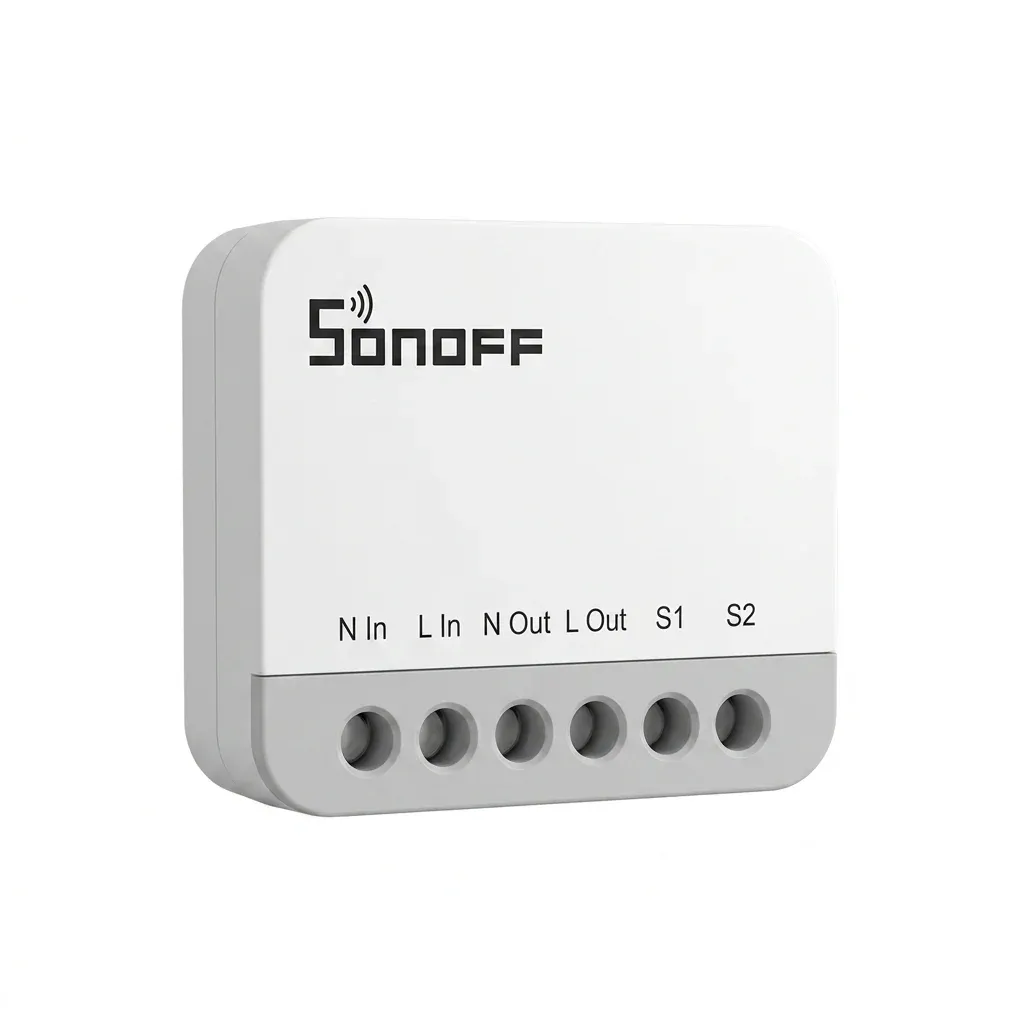














A compact relay that solves the switch-versus-smart-bulb problem
The ZBMINIR2 is built for homes where the wall switch still matters, but the lighting setup has already gone smart. It keeps the physical switch in the loop without forcing you to choose between manual control and app control, which is exactly where many budget smart home installs get awkward.
Sonoff has earned a solid reputation in the AliExpress smart home niche by focusing on practical hardware, broad ecosystem support, and compact modules that fit real electrical boxes. This model follows that pattern closely, and the early customer feedback is strong, with a 4.9 average rating from a small but very positive review set.
Why detach relay mode changes everyday use
Detach relay mode is the feature that makes this module more flexible than a basic smart switch relay. In practice, it lets you keep a smart bulb online even when the wall switch is off, so scenes, voice control, and app automations do not break the moment someone flips the switch.
That matters most in mixed setups, where a family member still expects a normal switch while the rest of the home runs on Zigbee routines. If you have ever lost smart control after a manual toggle, this is the part that removes the frustration, and the next benefit is even more useful for larger networks.
Zigbee router behavior helps the mesh stay stable
Unlike a simple end device, the ZBMINIR2 also acts as a Zigbee router, which means it can help extend network reach and reinforce signal paths. The product description says it can support up to 64 Zigbee end devices, so it is doing more than switching a circuit; it is also helping the mesh behave like a proper installed system.
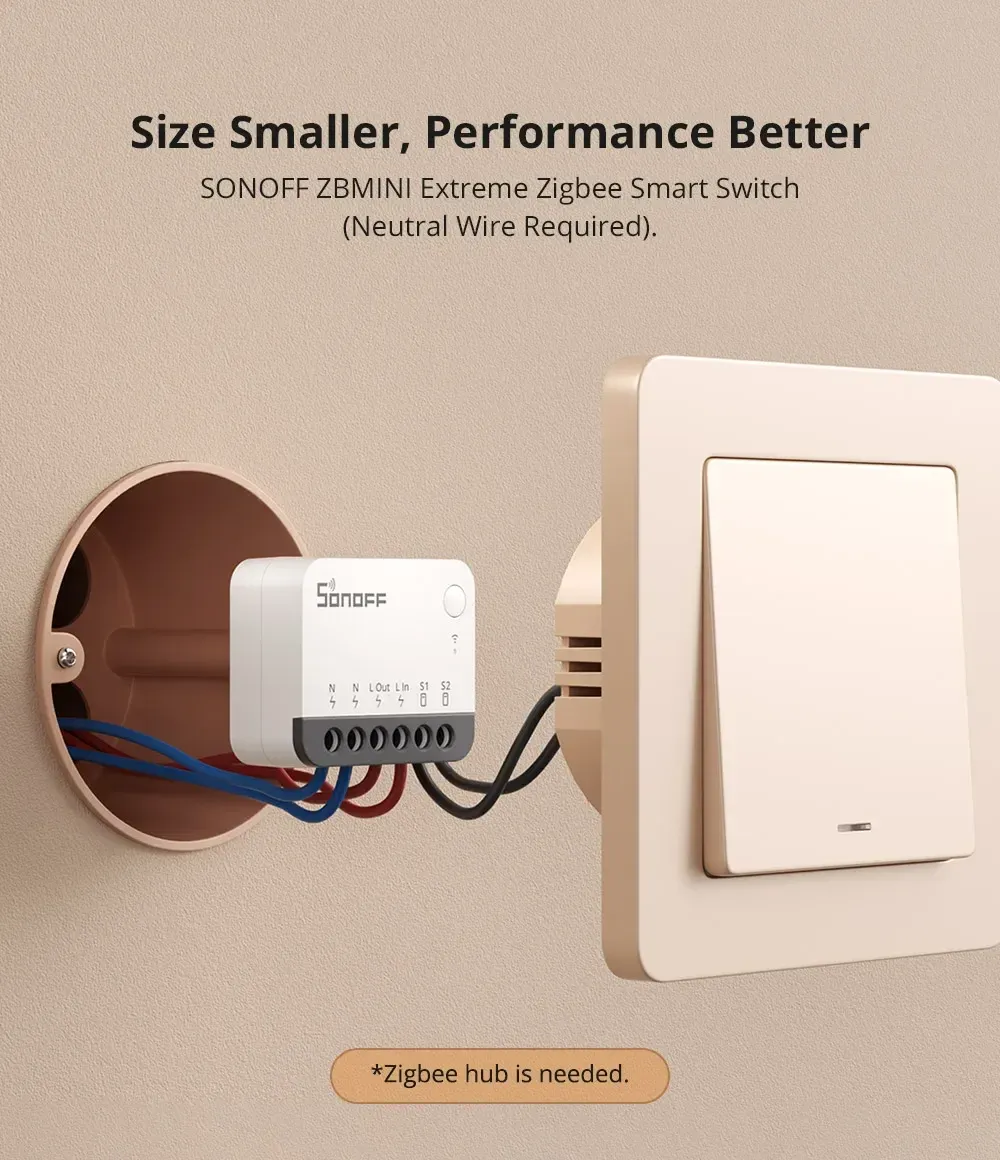
That makes it a better fit for apartments and multi-room layouts than a standalone Wi-Fi relay, especially when you already use a hub such as eWeLink, Home Assistant, Zigbee2MQTT, or a compatible Zigbee 3.0 gateway. The real question is whether it fits the box you already have, and the answer is usually yes.
Small body, broad switch compatibility
The module is designed to disappear into EU-type, 86-type, and 120-type mounting boxes, which is a major advantage when space is tight behind the wall plate. It also supports several external switch styles, including momentary, door, SPDT, and rocker switches, so installers are not locked into one wiring style.
That flexibility is useful for retrofit jobs where the existing wall hardware is staying in place. If you are upgrading an older circuit rather than building from scratch, this is the kind of detail that saves time during installation and reduces the chance of needing extra adapters or rework.
Delay power-on and load handling for more cautious automation
The delay power-on function is a practical safeguard after outages, especially in homes where several loads might restart at once. By staggering recovery instead of forcing everything on instantly, it reduces the shock of inrush current and makes the system feel more deliberate.
The module supports up to 10A, which places it in the typical range for lighting and lighter household circuits rather than heavy-duty appliances. For users who want a compact relay for lamps, fans, or controlled lighting zones, that balance of size and load handling is the point where this device makes sense.
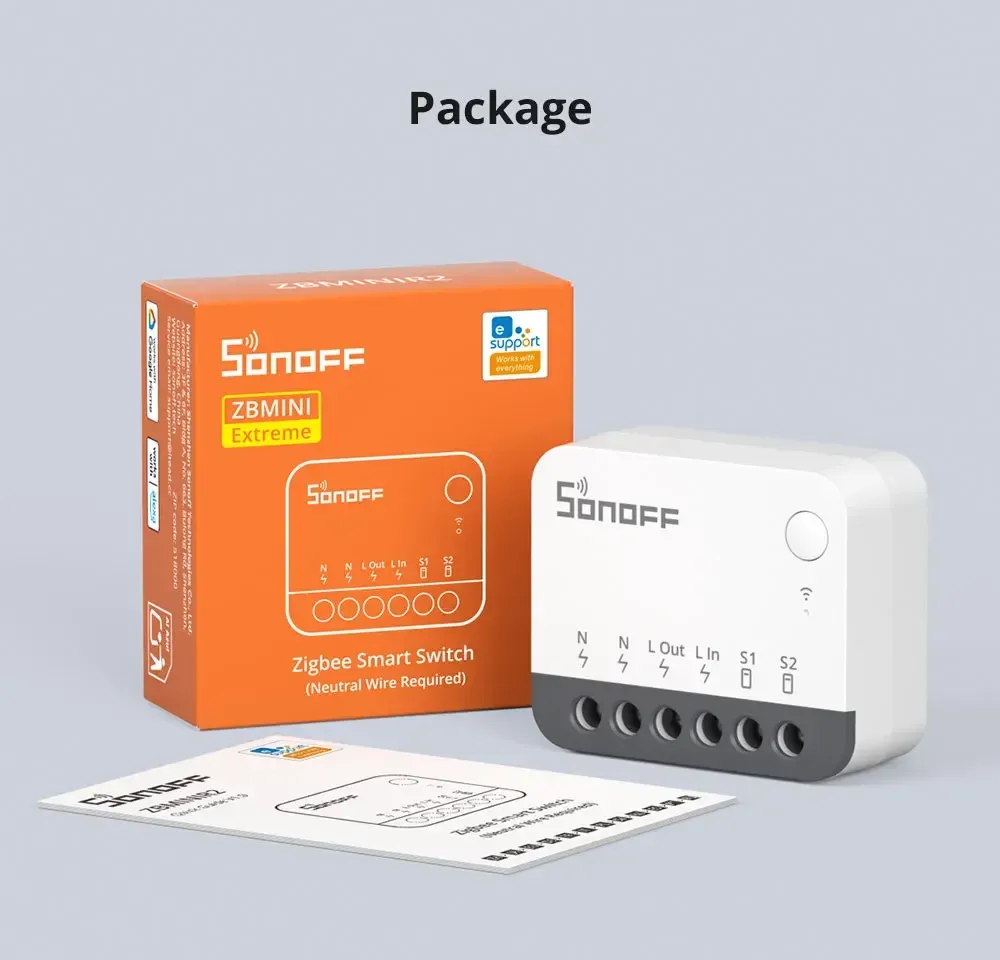
What users are likely to appreciate most
- It keeps smart bulbs reachable even when the wall switch is used.
- It strengthens Zigbee coverage instead of only consuming it.
- It fits into small electrical boxes without demanding a large cavity.
- It works with several common switch types, which helps retrofit installs.
- It supports open platforms, including Home Assistant and Zigbee2MQTT.
For a compact module at this level, that combination is unusually complete, and it explains why customers describe Sonoff as a dependable choice. The main limitations are just as important, though, because this is not a universal relay for every home setup.
Where it is less convenient than a Wi-Fi module
The biggest requirement is a Zigbee hub, so this is not a direct standalone upgrade for someone who wants app control with no gateway. It also depends on the quality of the existing wiring and the available space in the wall box, which can become the deciding factor in older homes.
Because it is a relay module rather than a finished switch, installation comfort will vary by user experience and electrical layout. If your goal is a cleaner smart-home mesh with better local control and less clutter on the wall, the ZBMINIR2 is aimed squarely at that use case, and that is where the next set of practical concerns begins.