














One switch, one ecosystem bridge
The Orb-MW1 solves a common smart home problem: mixed platforms that refuse to talk to each other cleanly. Sonoff has built a strong reputation in the AliExpress smart home space for keeping hardware practical, compact, and broadly compatible, and this model follows that pattern without overcomplicating the install.
Its main appeal is simple control across Matter, Google Home, Alexa, and Apple Home, which makes it easier to standardize lighting or appliance control in homes that already use different ecosystems. That matters if you want one wall switch to behave consistently from the app, voice assistant, or automation scene, so how does it handle the wiring side?
What the 10A rating means in daily use
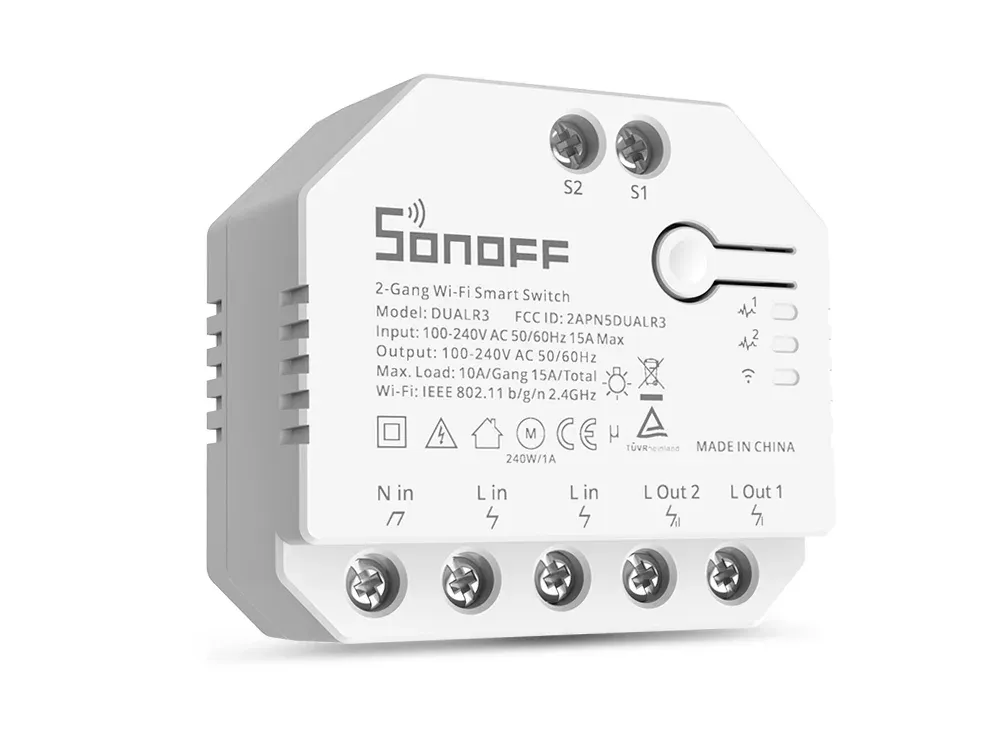
The switch is rated for 100-240V and up to 10A resistive load, which is enough for many lighting circuits and light-duty household control tasks. In practice, that means it is better suited to standard wall lighting than to heavier electrical loads, and the 2.4GHz Wi‑Fi radio keeps it aligned with most budget-friendly smart home networks.
The ESP32-C3FN4 MCU is a useful detail because it points to a modern, efficient control core rather than a bare-bones relay design. Users who want responsive app behavior and stable automation timing will likely appreciate that, especially when scenes need to trigger without noticeable lag.
Matter support without locking you into one app
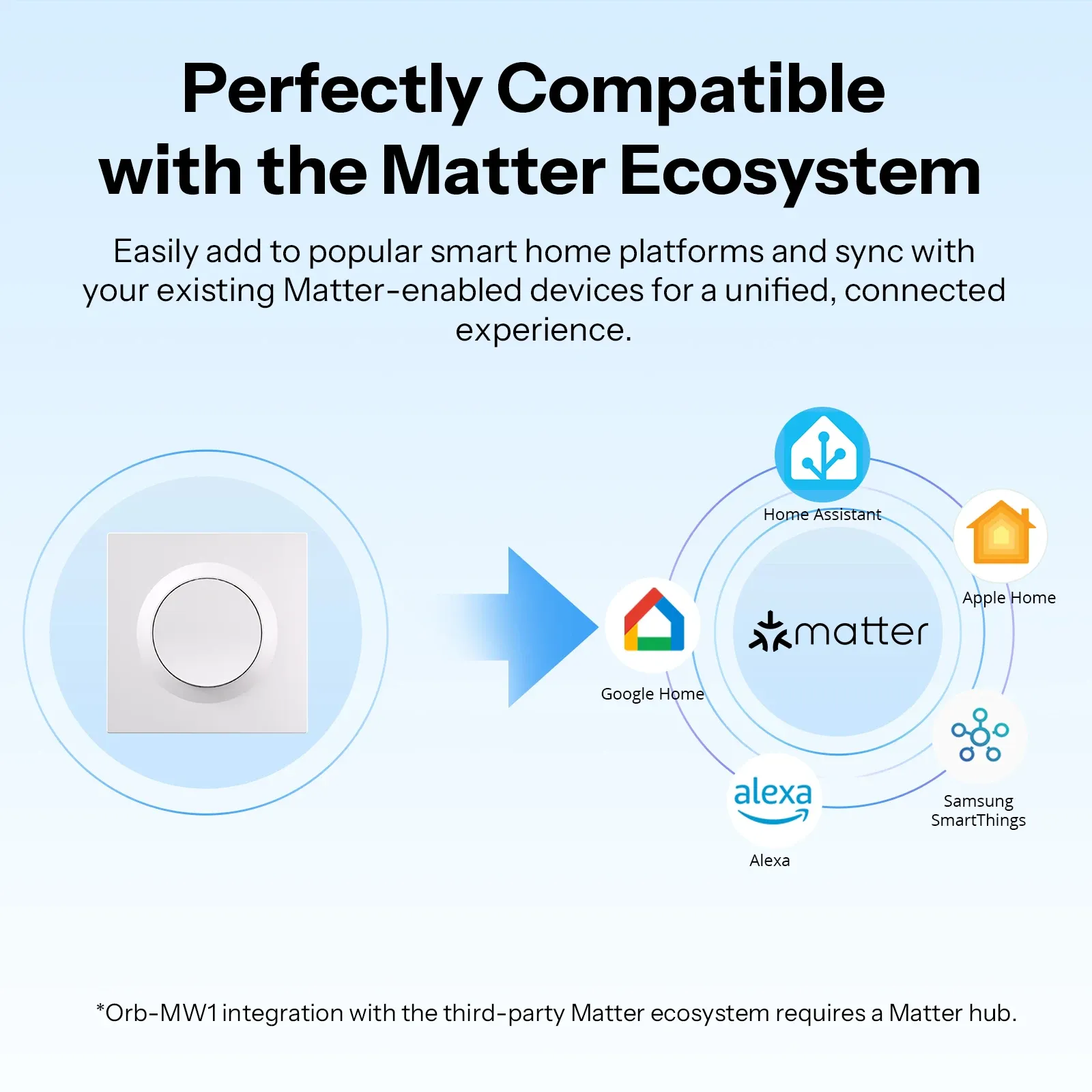
Matter is the feature that gives this switch its strongest long-term value, because it reduces the risk of getting trapped inside a single ecosystem. With a Matter hub in place, the Orb-MW1 can sit inside a broader smart home setup and still work with Apple Home or other compatible platforms, which is exactly the kind of flexibility many AliExpress smart home shoppers look for.
That flexibility is not the same as plug-and-play magic, though. The product still depends on correct wiring, a compatible wall box, and in some cases a separate Matter hub, so this is a smarter fit for users who already understand basic smart switch installation or have an electrician involved.
Fusion Series fit and the wall-box reality
At 86 x 86 x 34 mm and 84 g, the unit is compact enough to sit neatly in a standard wall opening, while the PC casing should feel familiar to anyone used to modern switch modules. The product is designed for the Fusion series frame system, which is sold separately, so the final look depends on pairing it with the right trim rather than treating it as a standalone decorative switch.
That modular approach is useful if you want a cleaner built-in appearance instead of a bulky retrofit module hidden behind a plate. The tradeoff is obvious: you gain a more polished finish, but you need to plan the frame and wiring together before installation, which is where careful buyers usually avoid surprises.
Who gets the most from it
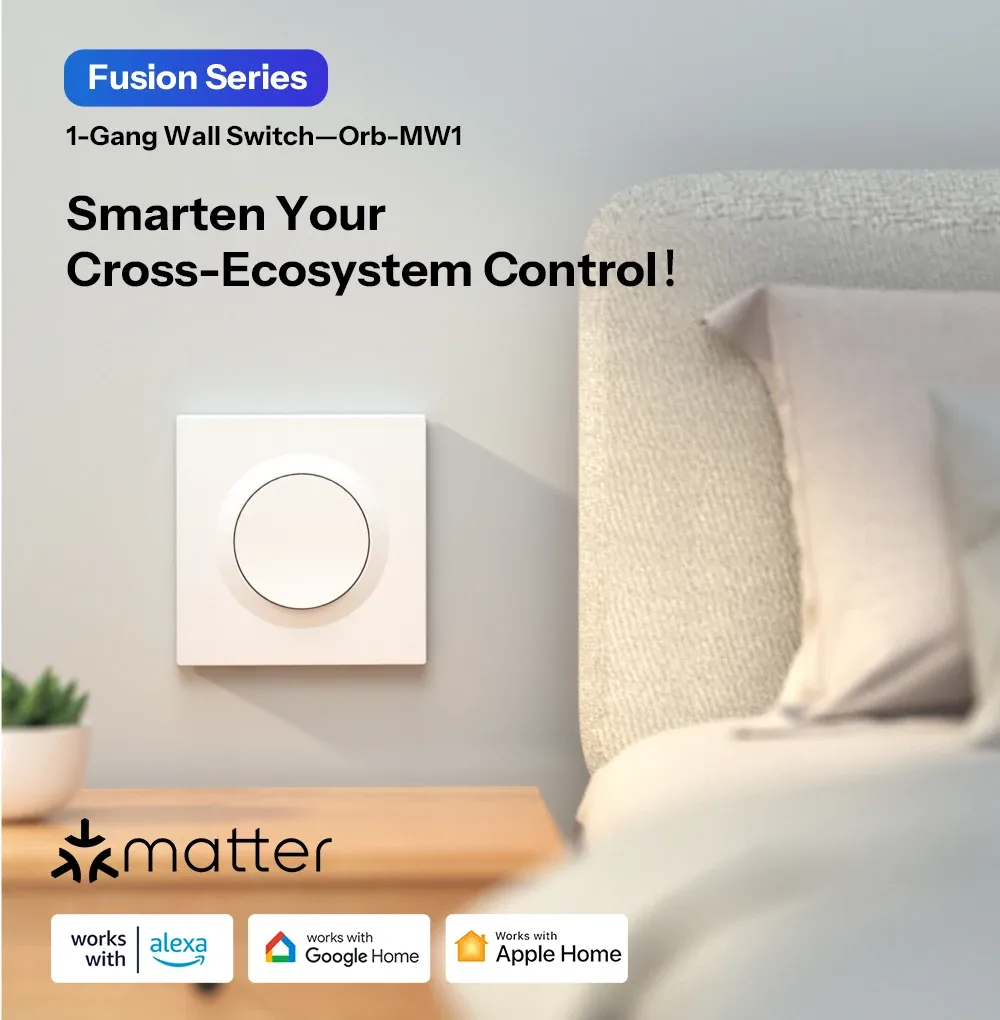
This switch makes the most sense for homes that already use Google Home, Alexa, or Apple Home and want one control point that can live across them. According to customers, the product has been received well overall, and the 5-star-only review pattern suggests satisfaction with the seller experience and the item’s core behavior, though the review pool is still small.
If you are replacing an older wall switch and want Matter-ready control without moving to a larger hub-heavy setup, the Orb-MW1 is a sensible middle ground. It is not the cheapest relay-style option, but the combination of Sonoff hardware, Wi‑Fi, and cross-platform support gives it a more future-proof profile than many basic smart switches, so what should you watch before ordering?
Practical tradeoffs to keep in mind
The biggest limitation is that this is a 1-gang wall switch, so it is designed for a single circuit rather than multi-button control. You also need to confirm conductor size, since the recommended wiring is 16AWG to 14AWG solid or stranded copper only, which may matter in older installations.
Because it is a smart wall switch rather than a battery-powered accessory, installation quality matters more than app setup. If your box depth is tight, or if your electrical layout is unusual, checking dimensions and load type first will save time and help the switch perform the way it should.