












Sonoff’s reputation in compact smart control
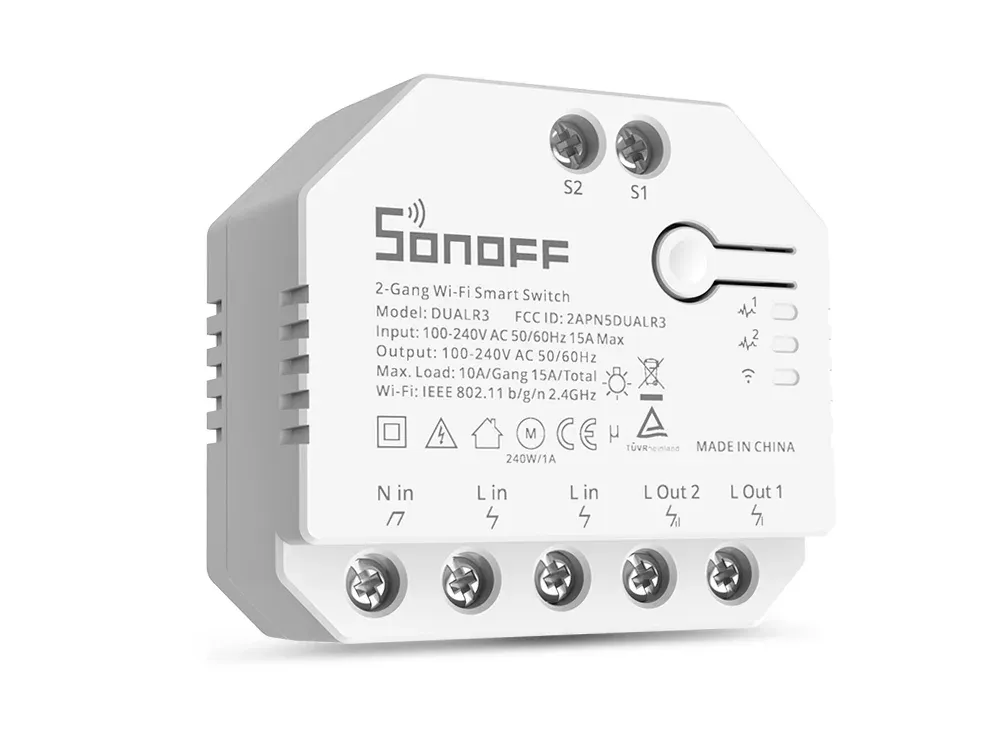
Sonoff has built a solid name in the AliExpress smart home niche by focusing on reliable relay modules, broad app support, and practical automation features instead of flashy extras. This DUALR3 follows that pattern with a small footprint, dual-channel control, and clear compatibility with eWeLink, Alexa, and Google Assistant.
What makes the brand stand out is the way it balances DIY flexibility with mainstream usability, so the module can serve both first-time smart home upgraders and experienced installers. That matters here, because the product is designed to disappear behind a switch while still doing a lot of work, so how does it perform in real homes?
Two circuits in one hidden module
The main advantage is simple: one compact unit can manage two independent loads, which is useful when a wall box is crowded or when you want to control paired devices from a single install point. With a body measuring 54 × 49 × 24 mm, it is small enough for many flush-mount jobs, though the box depth still needs checking before installation.
The dual relay design is especially practical for lights, fans, and split control points where separate channels reduce wiring clutter. Users also report that installation feels straightforward once the wiring plan is clear, which is a good sign for a module meant to sit behind existing hardware.
Why the motor mode matters for shutters and blinds
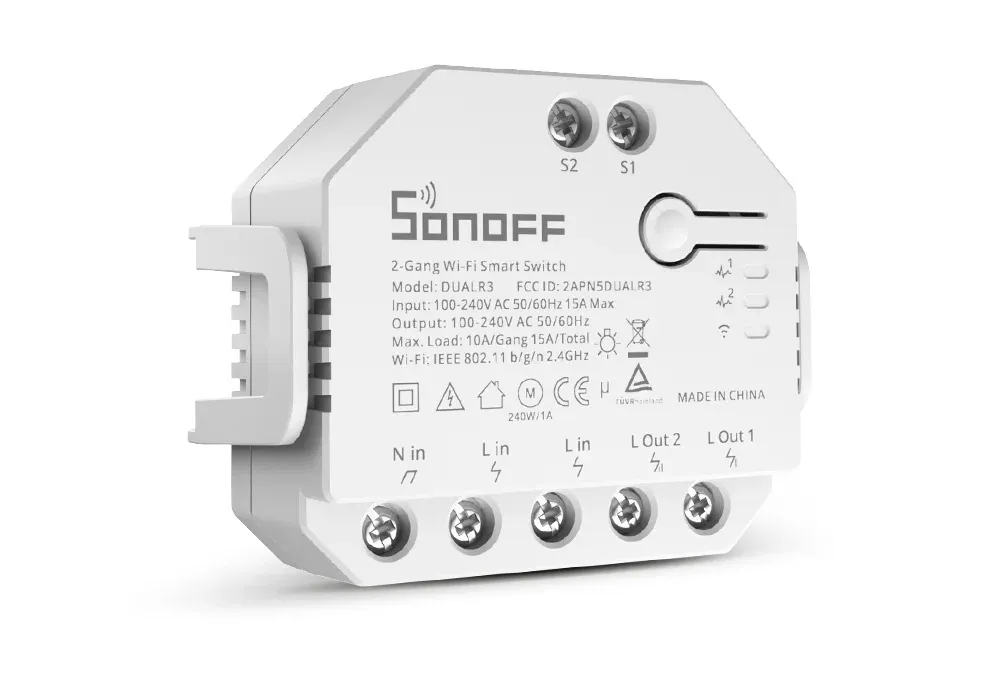
One of the strongest use cases is motorized shading, because the module supports switch mode, motor mode, and meter mode. In motor mode, it can open, close, and stop roller shutters or blinds, turning a manual window treatment into a scheduled part of the home routine.
That is more useful than a basic relay because it gives you position-style control instead of only on/off behavior. For apartments, patio awnings, and bedroom blinds, the result is quieter mornings and more precise light control, which is exactly where a smart relay earns its keep.
Power metering for loads that need monitoring
The metering function is not just a spec box feature; it helps track how much electricity connected devices use over time. For a household trying to identify energy-hungry appliances, that data can reveal patterns that a standard switch would never show.
In meter mode, the relay stays on while the app focuses on consumption tracking, so this is better suited to monitoring than automation. That distinction is important, because it keeps the module honest about what it does best and prevents confusion during setup.
Load limits that define the right application
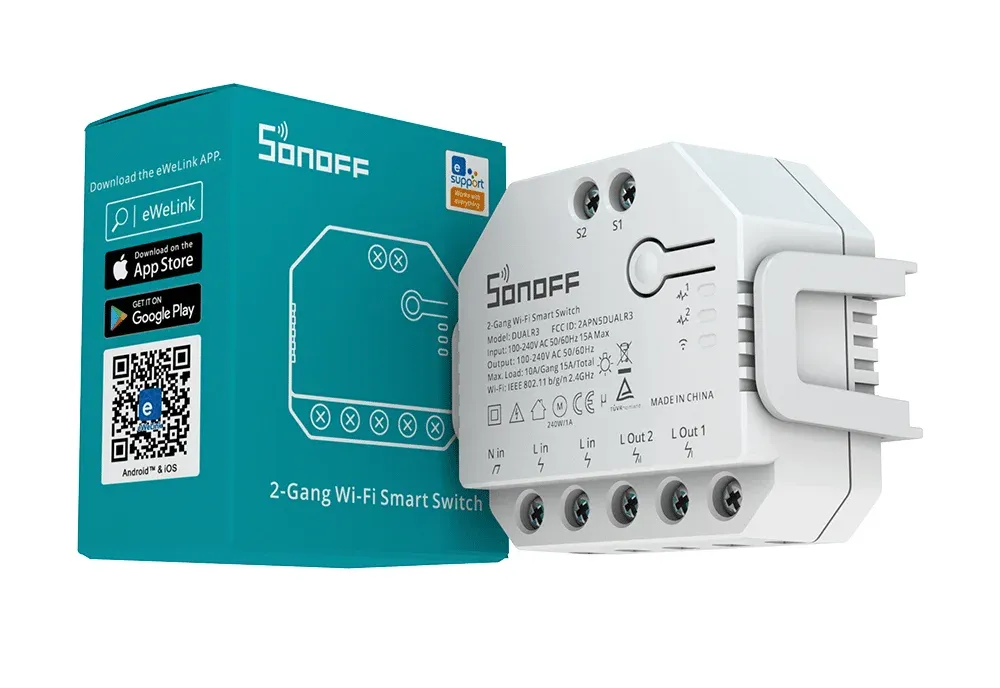
The rated capacity is strong for a compact DIY module, with up to 3300W total resistive load and 2200W per gang, plus a motor load range of 10–240W. Those numbers make it suitable for common home circuits, but not for heavy industrial equipment or oversized motors.
The fire-retardant PC V0 enclosure and CE, FCC, and TUV compliance help reinforce its safety profile, especially for in-wall use. According to customers, the firmware and app pairing are usually smooth, which aligns with the product’s focus on practical reliability rather than complex configuration.
Who gets the most value from it?
This module makes the most sense for users who already have a clear wiring plan and want hidden smart control without replacing every wall switch in the house. It is also a strong fit for anyone building a compact automation setup around shutters, blinds, or paired lighting circuits.
If you want a visible smart switch with a touch panel, this is not that product. If you want a discreet relay that can sit behind the wall and quietly handle app control, scheduling, and voice commands, the DUALR3 is much closer to the mark.