













Reliable climate control from a brand that already knows smart switching
Sonoff has earned a strong reputation in the AliExpress smart home niche by combining practical hardware with broad platform support and consistent app integration. That matters here, because a climate switch is only useful if it reacts quickly, stays connected, and plays well with the rest of your setup.
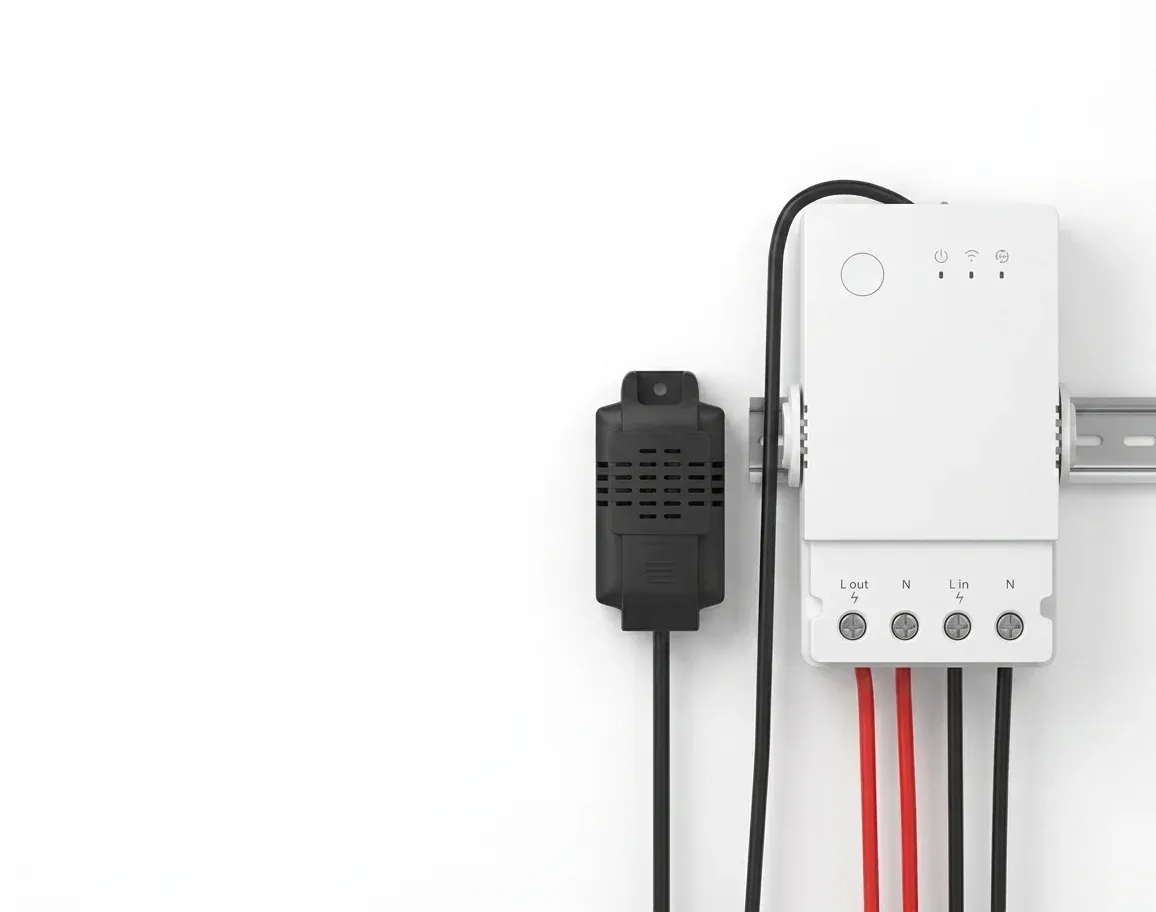
The TH Origin follows that formula with a simple goal: monitor temperature or humidity and trigger a relay when conditions change. For users building greenhouse, boiler, reptile, or irrigation automation, it removes the need to watch readings manually, so what does the hardware actually give you in daily use?
16A or 20A switching: why the load rating matters
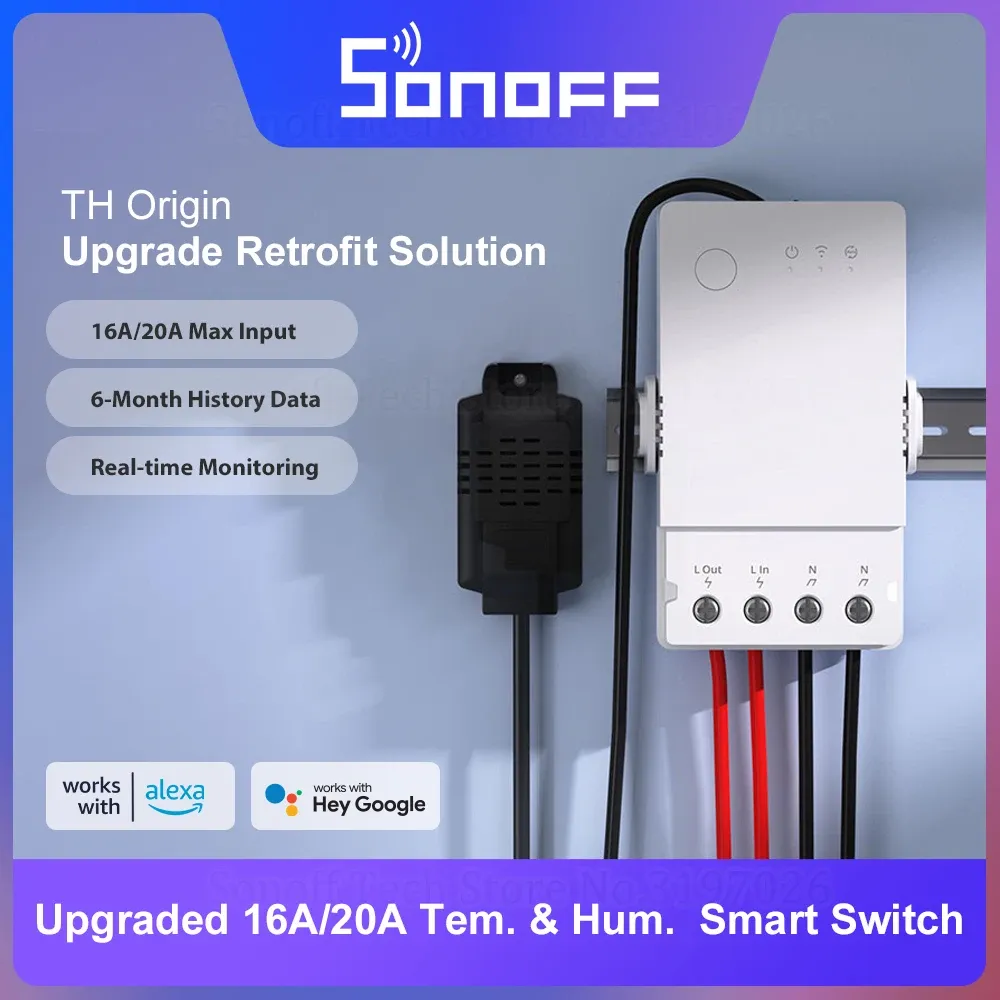
The THR316 version handles up to 16A, while the THR320 reaches 20A, which gives it room for heavier appliances than many entry-level smart relays. In practice, that extra headroom is useful when you want a device that feels less strained in demanding setups, especially where continuous switching is part of the routine.
Users mention easy first-time connection and stable operation, which aligns with the product’s straightforward ready-to-go assembly. The white PC V0 casing also suggests a more serious approach to enclosure safety than the cheapest generic modules, so the next question is how it handles sensing and automation.
ESP32 control with Wi‑Fi and Bluetooth for faster setup
Sonoff uses an ESP32 chip here, paired with Wi‑Fi IEEE 802.11 b/g/n on 2.4GHz and Bluetooth-compatible pairing. That combination usually makes onboarding smoother than older Wi‑Fi-only modules, and real customer feedback points to first-try setup as a common experience.
For smart home users, the bigger benefit is not the chip name itself but the flexibility it enables in eWeLink and Home Assistant workflows. The device can act on on/off, invert, temperature, and humidity triggers, which is enough to build simple control logic without adding a separate controller, and that leads naturally to its sensor support.
Three sensor types, one RJ9 4P4C port
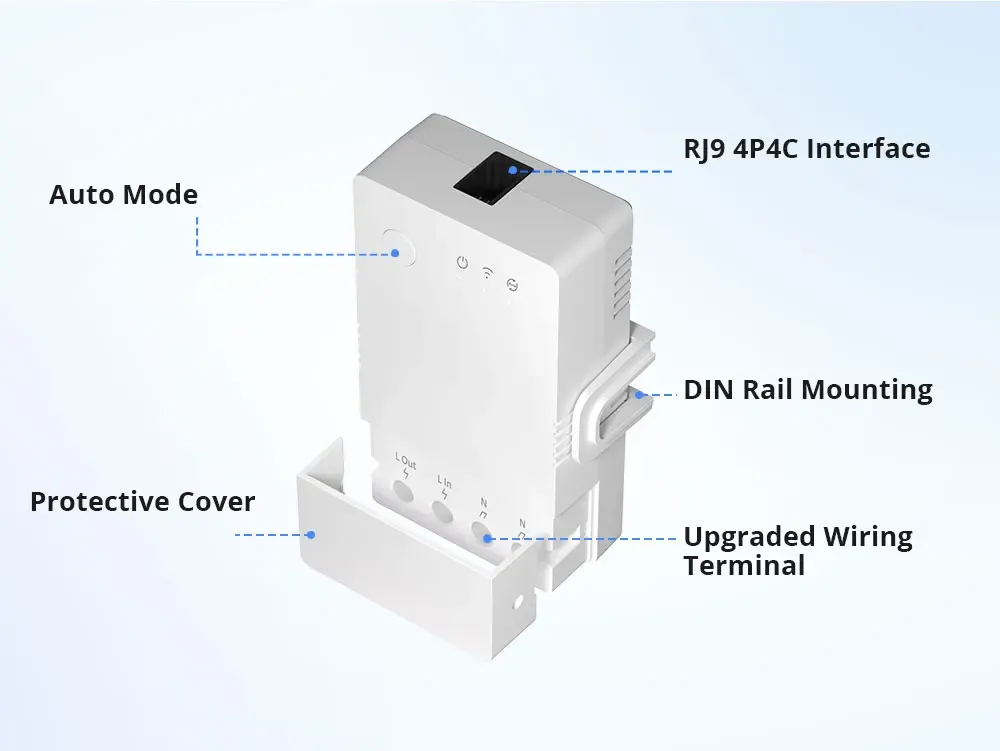
The TH Origin supports THS01, DS18B20, and MS01 sensors, giving it coverage for air temperature, waterproof temperature monitoring, and soil moisture use cases. The upgraded RJ9 4P4C connector is a practical improvement because hot-plugging is easier and the connection feels more stable than loose-jack alternatives.
That flexibility makes the device useful far beyond a standard thermostat replacement. A heated pool, fermentation cabinet, terrarium, or greenhouse can all benefit from the same relay logic, and the RL560 extension cable pushes the sensor far enough away from the main unit to place readings where they actually matter.
Historical data that helps you spot patterns, not just numbers
Sonoff says the TH Origin stores up to six months of temperature and humidity history with hourly accuracy, which is more valuable than a live reading alone. Instead of guessing why a room swings at night or a grow space dries out in the afternoon, you can review the trend and adjust the threshold with more confidence.
That historical view is one of the reasons this model stands out against basic smart switches that only toggle power. According to users, the device is also easy to integrate with alternative firmware such as Tasmota, which will matter to tinkerers who want deeper control before moving into the FAQ.
Where the TH Origin fits best in a smart home
This is not a general-purpose wall switch; it is a control node for environments where climate changes affect equipment behavior. If you need a relay that reacts to measured conditions rather than a manual tap in an app, the TH Origin fits that job better than a standard smart plug.
Its strongest use cases are boilers, humidity-driven fans, irrigation systems, and temperature-sensitive enclosures, where automation saves time and keeps conditions steadier. The 100-240V input on the 16A and 20A variants also keeps installation familiar for many household and workshop setups, so what should buyers watch for before choosing it?
- Choose the 20A version for heavier continuous loads.
- Use the right sensor for the job: air, waterproof temperature, or soil moisture.
- Place the sensor with the RL560 cable if the main unit sits in a warmer enclosure.
- Expect the best results on a stable 2.4GHz Wi‑Fi network.