













Climate monitoring that solves a real indoor comfort problem
If a room feels stuffy, too dry, or slightly damp, this sensor gives you the numbers before the discomfort becomes obvious. SONOFF keeps the setup practical: local LCD visibility, remote app monitoring, and Zigbee 3.0 connectivity for smart home routines.
That mix makes it useful in bedrooms, nurseries, storage areas, and home offices where conditions change quietly through the day. The appeal is not flashy automation, but dependable visibility, which is why the brand has earned a strong reputation in the AliExpress smart home niche.
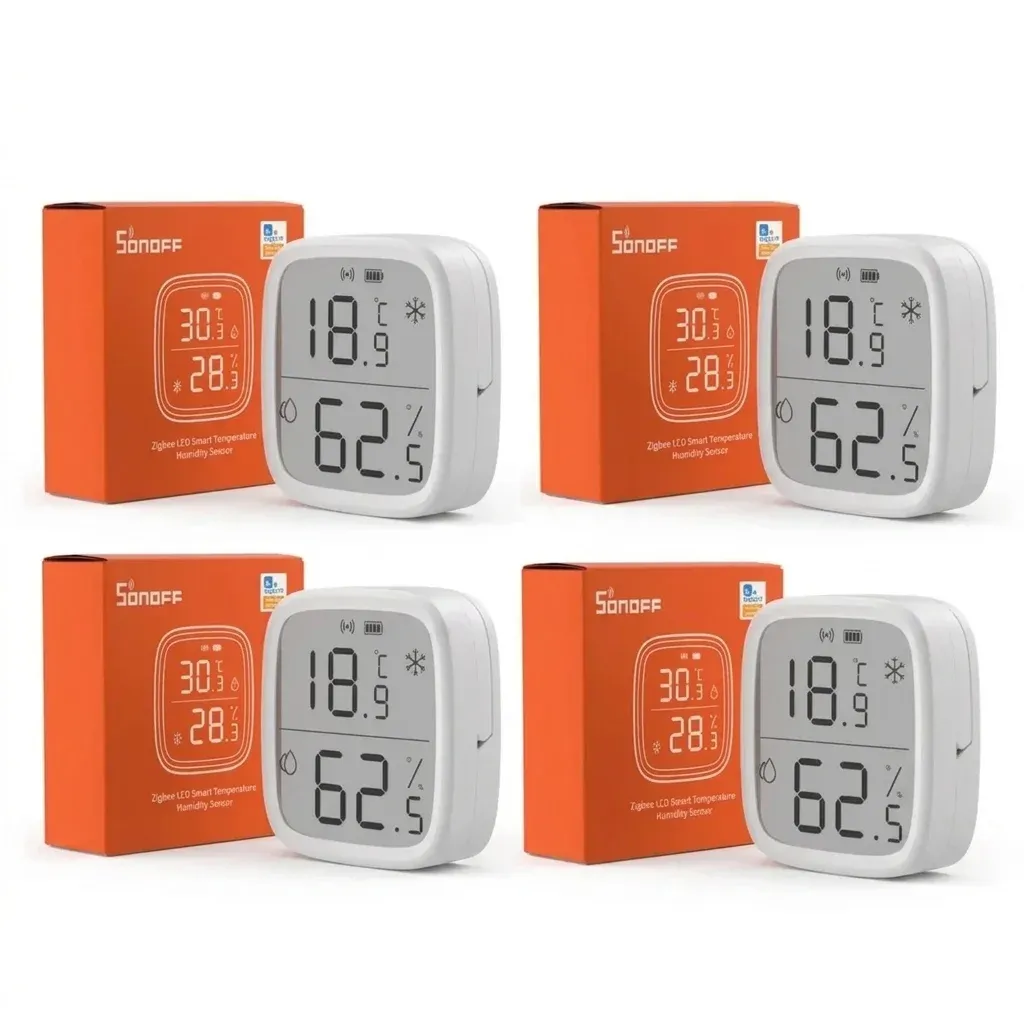
What the 2.8-inch LCD changes in daily use
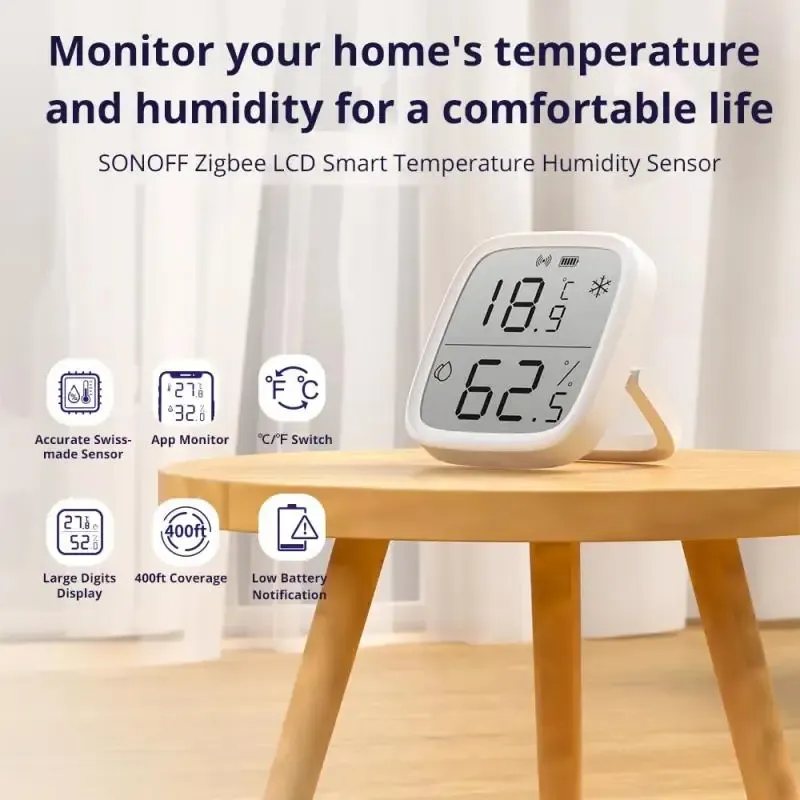
The reflective 2.8-inch screen is the feature that makes this model easier to live with than app-only sensors. You can glance at temperature, humidity, and battery status without opening eWeLink, which matters when the sensor is mounted across the room or used by family members.
Because the display is segment-based rather than decorative, the readings stay legible in ordinary indoor light and remain easy to read at a distance. That is a small detail, but it turns the device from a background node into something you can check at a glance, so what happens when the room drifts out of range?
Accuracy and refresh speed: why the numbers feel useful
The stated ±0.2℃ temperature tolerance and ±2%RH humidity tolerance place it in the more credible range for consumer smart home sensors. A 5-second refresh cycle is fast enough to catch changes from heating, AC, or a humidifier without making the display feel stale.
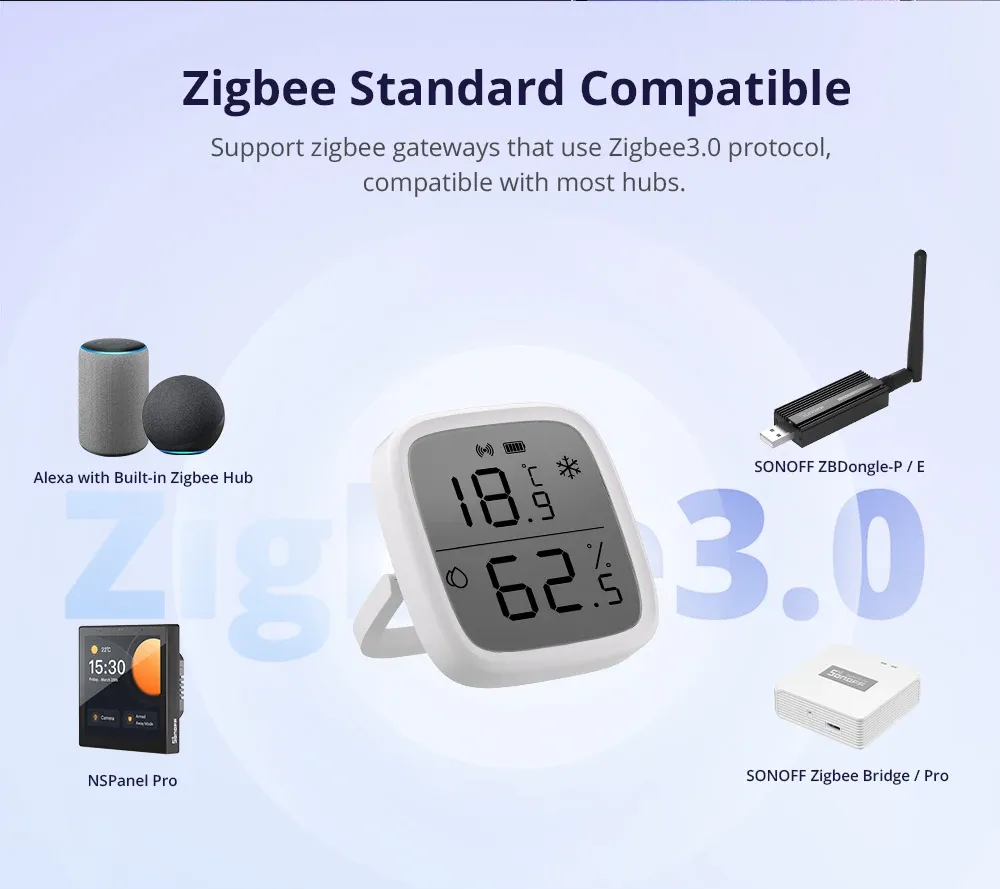
Users in real AliExpress feedback frequently mention smooth pairing with Home Assistant, Zigbee2MQTT, ZHA, and IKEA hubs, which suggests the sensor is not just accurate on paper but also cooperative in mixed ecosystems. If you already run a Zigbee network, integration is likely to be the least stressful part.
Zigbee 3.0 and eWeLink: the setup path that makes sense
This model uses Zigbee 3.0, so it is best suited to homes that already have a compatible hub or plan to build one. That is a smarter route than Wi-Fi for a battery-powered sensor, because it keeps traffic light and helps the CR2450 cell last longer in routine indoor use.
eWeLink support adds remote access, alerts, and historical data, while Alexa and Google Home compatibility make it easier to surface climate data in broader automations. The practical win is not voice control itself, but the ability to trigger fans, dehumidifiers, or heaters when readings cross a threshold.
Battery life and placement: where the compact body helps
The 59.5 x 62.5 x 18.5 mm body is small enough to fit on a shelf, side table, or wall-mounted spot without looking intrusive. A single CR2450 button cell keeps the design simple, and the low-power Zigbee approach suits a device that is meant to sit quietly for months.
Indoor use is the clear target here, with a working range from -5℃ to 40℃ and humidity tolerance from 5% to 95% non-condensing. That makes it a better fit for living spaces, closets, and utility rooms than outdoor or high-condensation environments, which is worth keeping in mind before you place it.
Who will get the most from it
This sensor is strongest for users building a Zigbee-based smart home who want room-by-room climate data without overcomplicating the setup. It is also a sensible choice for anyone comparing it with cheaper generic sensors, since the combination of display clarity, refresh speed, and ecosystem support gives it a more polished feel.
Customer feedback is broadly positive, with many users highlighting easy pairing and reliable operation in Home Assistant-driven setups. The few complaints tend to be logistical rather than technical, which leaves the product itself looking solid for its class, so the final question is whether your hub is ready for it?
What stands out in practice
- Clear LCD readout reduces app checking.
- Zigbee 3.0 suits battery-powered smart home deployments.
- Fast 5-second refresh helps track active HVAC changes.
- Good tolerance specs support dependable room monitoring.
- Works well with eWeLink and major voice ecosystems.