















Why this bridge matters in a mixed smart home
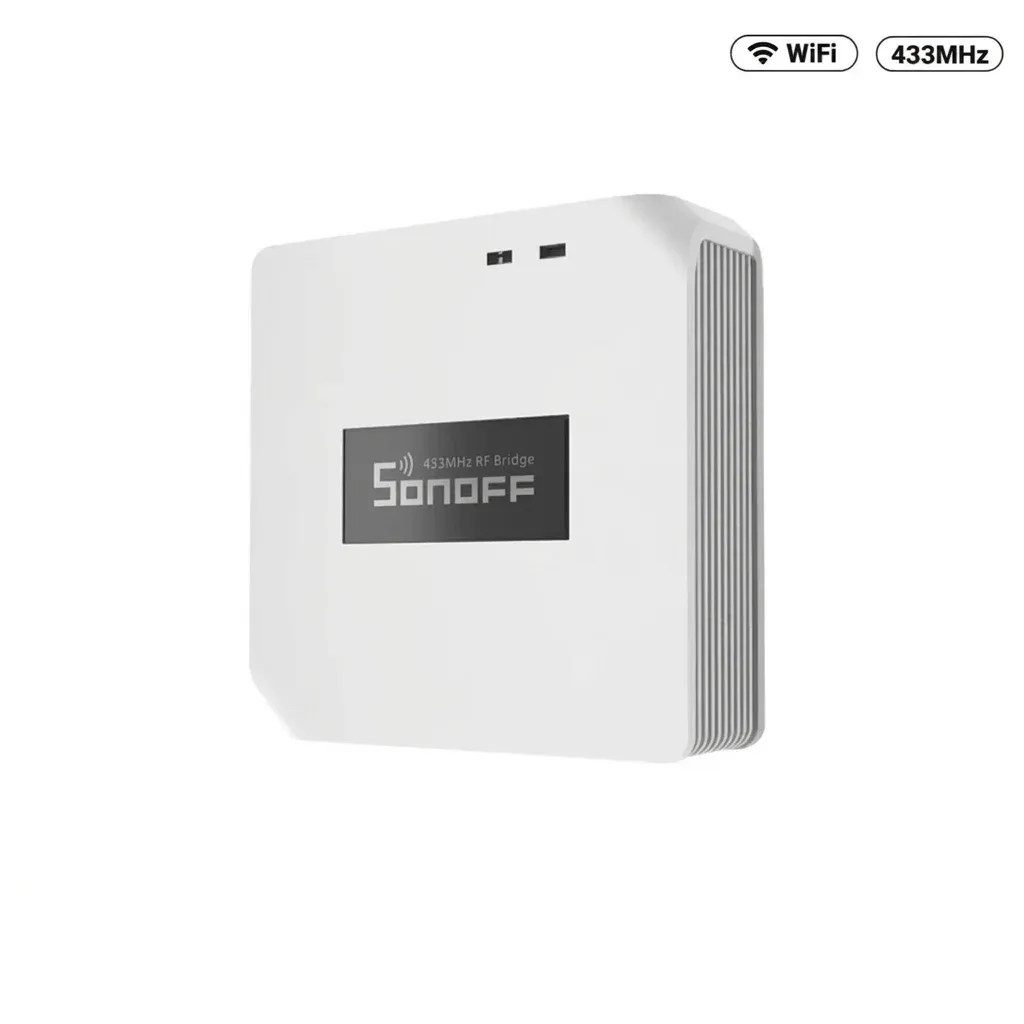
Many homes still rely on 433 MHz remotes for outlets, blinds, alarms, and basic switches, and that creates a gap between older devices and modern app control. The SONOFF RF BridgeR2 closes that gap by translating RF commands into Wi‑Fi-based automation, so legacy gear can join the same routine set as newer smart devices.
Sonoff has built a solid reputation in the AliExpress smart home niche by focusing on practical automation hardware that is easy to integrate and broadly compatible. The brand’s strength is not flashy design but dependable control logic, which is exactly what matters when you want a bridge to sit quietly between remotes, sensors, and voice assistants, so how well does this one handle that job?
433 MHz control without replacing your devices
The main benefit here is preservation: you keep the devices you already own and add smart control on top. That is especially useful for RF-controlled lights or accessories that work fine mechanically but feel outdated because they cannot talk to an app or assistant.
In practice, the bridge is most valuable in rooms where one remote controls several functions, since it can reduce clutter and centralize routines in eWeLink. According to users, the experience depends heavily on pairing quality, which makes setup discipline more important than raw specs, and that leads straight into compatibility.
Compatibility is the real buying decision
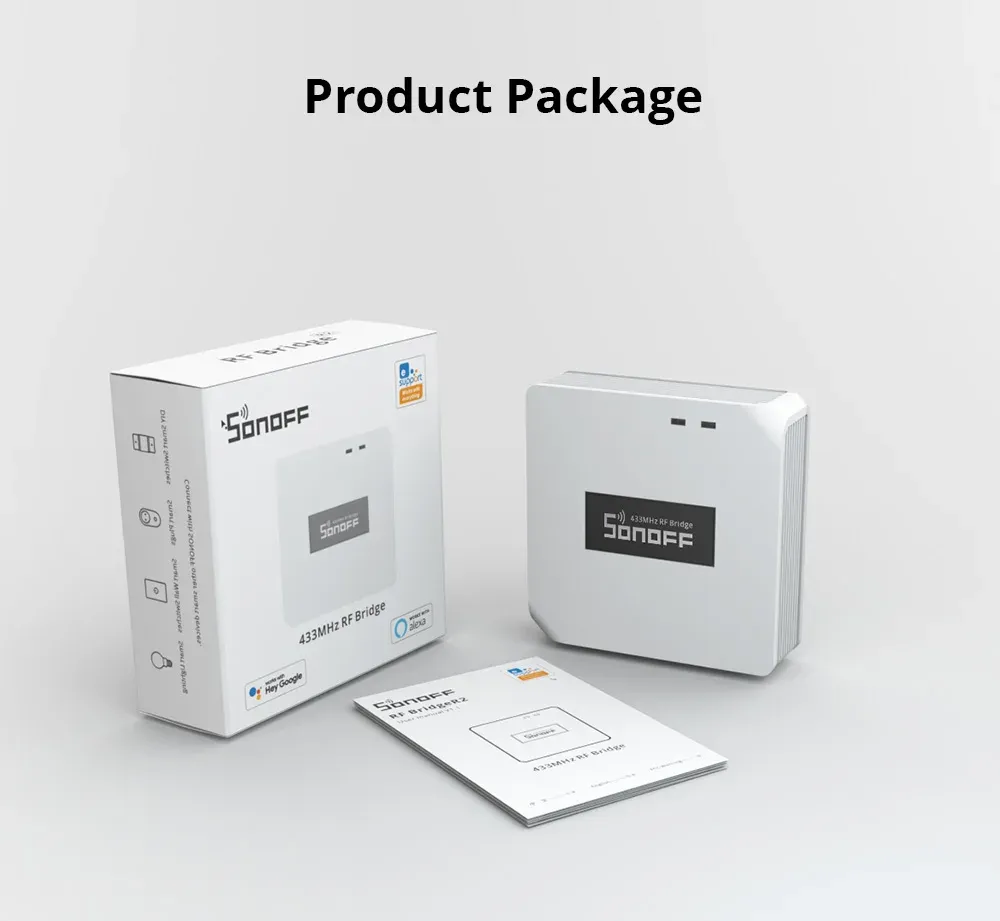
This unit is positioned as an all-compatible hub, but the real-world result depends on whether your RF accessory uses a code and protocol the bridge can learn. One user review noted it seemed limited to a Sonoff 4-button remote, while another reported connection trouble, which suggests the learning process may be less universal than the listing implies.
If your setup is already Sonoff-heavy, the odds are better because the ecosystem is more predictable and eWeLink routines tend to be straightforward. If you want to control random 433 MHz devices from different brands, expect some trial and error before everything responds consistently, which is where the next point becomes important.
Wi‑Fi, voice assistants, and app control in one center
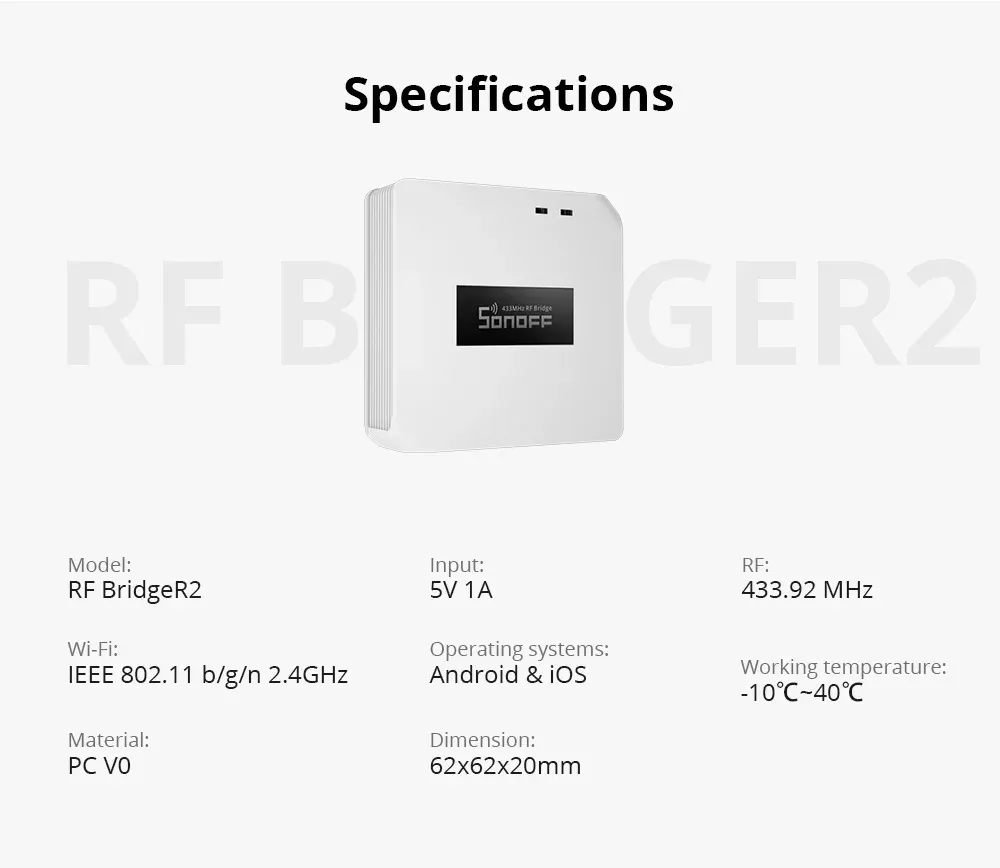
Because the bridge uses Wi‑Fi for the smart side and RF for the device side, it works as a translation layer rather than a full replacement hub. That makes it useful for voice assistants like Alexa and Google, where a simple spoken command can trigger a familiar RF action without touching the original remote.
The absence of a camera, battery, or portable form factor keeps the design focused on always-on home control, powered from AC and ready to go out of the box. For users building scenes like “all lights off” or “evening mode,” that simplicity is a strength, but it also means the bridge is only as good as your pairing and signal environment.
What the low entry cost really buys you
At $15.48, this is a low-risk way to test RF automation before committing to a larger smart home overhaul. The value is strongest when one bridge can unlock several older devices, because the cost per controlled accessory drops fast if your home already uses 433 MHz gear.
The trade-off is that the bridge is not a universal fix for every RF setup, and the real test is whether your devices respond cleanly in the app after learning codes. If you are planning a retrofit, that question matters more than the headline feature list, because the next step is deciding what to automate first.
- RF-to-Wi‑Fi translation for legacy 433 MHz devices
- Works with eWeLink automation scenes
- Voice assistant support for hands-free control
- AC-powered, ready-to-go design
- Compact smart home retrofit hub
- CE, FCC, and RoHS certified