
















Small module, big upgrade for older wiring
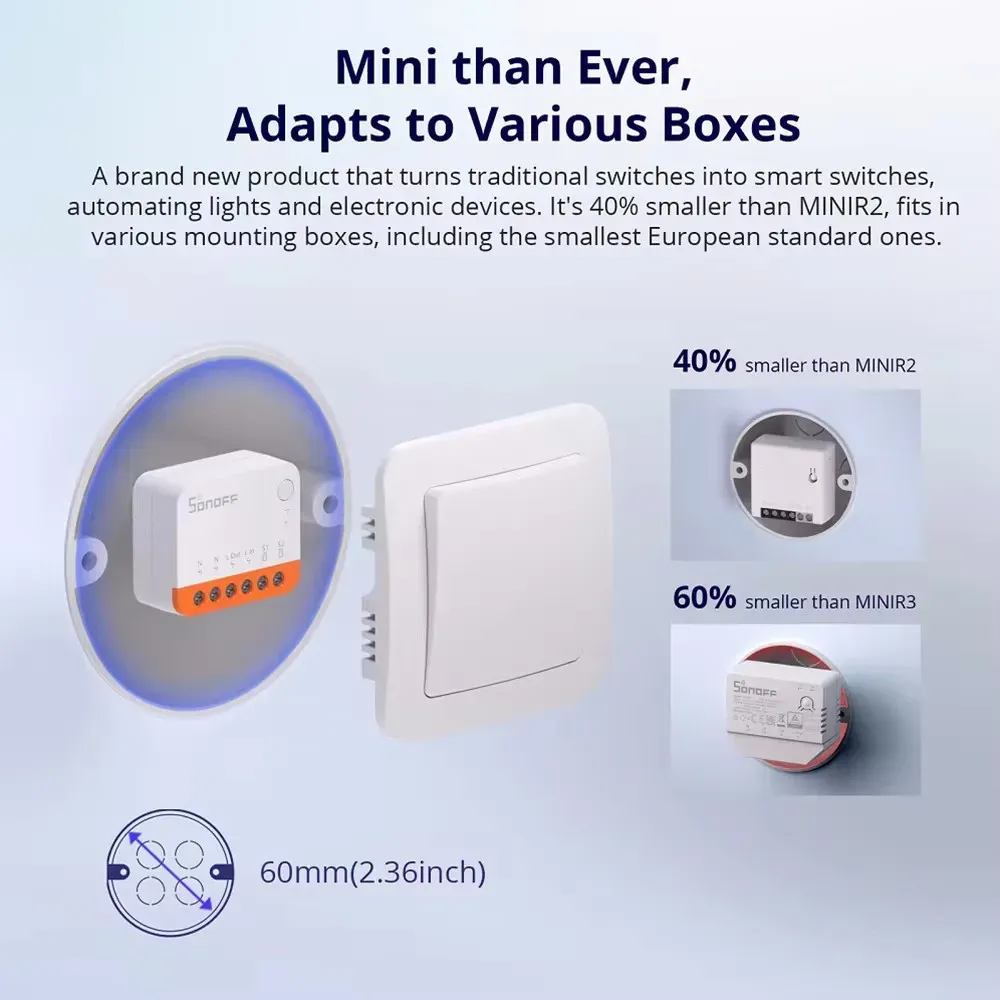
The main appeal of the SONOFF Mini R4 is simple: it brings smart control to a traditional light or device circuit without demanding a large back box. For homes where space behind the switch is tight, that compact 39.5 x 33 x 16.8 mm footprint is the difference between a clean retrofit and a frustrating install.
Sonoff has built a solid reputation in the AliExpress smart home niche by focusing on practical hardware rather than flashy extras, and this module follows that pattern. It feels like a tool for people who want a dependable bridge between conventional wiring and app-based control, so the real question is how it behaves once it is in the wall?
ESP32 and 2.4 GHz Wi-Fi: what that means in daily use
Inside the Mini R4 is an ESP32 chip paired with IEEE 802.11 b/g/n 2.4 GHz Wi-Fi, which points to stable home-network compatibility rather than experimental smart-home behavior. In practice, that should translate to faster response through eWeLink and fewer headaches when integrating with Alexa, Google Home, or Yandex Alice.
The 100-240V input and 10A maximum rating make it suitable for common household lighting and light-duty loads, not heavy appliances. That distinction matters, because the module is best used where you want responsive switching and automation, not as a universal relay for everything in the house.
Detach relay mode keeps the app useful even when the wall switch is off
The most interesting feature here is detach relay mode, which separates the external switch state from the relay state. That means the physical button can stop affecting the smart control logic, so the device can stay online in the app even after you use the wall switch.
For users building scenes, this is more useful than it sounds. If you want a hallway light to remain controllable through automations after someone taps the wall plate, detach relay mode preserves that flexibility instead of turning the switch into a one-way override.
Works with more switch types than many compact relays
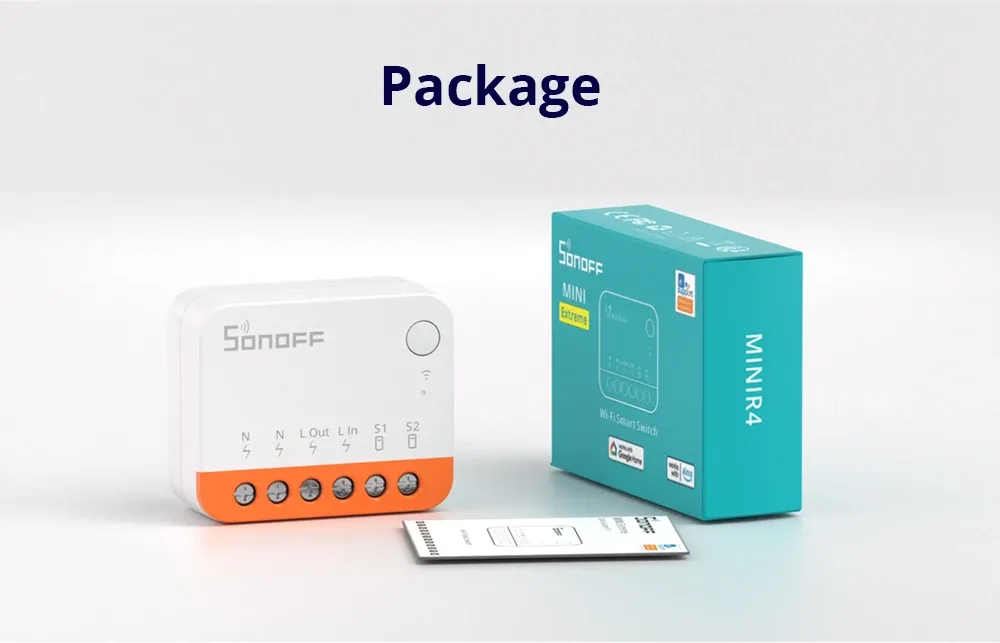
MINIR4 supports momentary switches, door exit switches, SPDT switches, latching switches, and even dry contact sensors, which gives installers more freedom than basic relay modules. That makes it a stronger fit for retrofits where the existing wiring does not match a single switch style.
The two-channel control design also helps when you are planning a more structured smart-home setup, especially in mixed installations with separate scene triggers and lighting control. If you are replacing a simple wall switch, the extra compatibility can save time; if you are wiring a more advanced circuit, it can save an entire redesign.
eWeLink-Remote support adds local control options
MINIR4 can work with S-MATE or R5 through eWeLink-Remote, letting you trigger local control without relying only on cloud commands. That is a meaningful upgrade for users who want faster response in the room itself, especially when voice control is not the most convenient option.
According to users, the module has been well received for straightforward performance, with a 4.4/5 average from early reviews and a strong positive rate. The sample feedback is brief but consistent, which usually signals a product that does its job without drawing attention to itself, and that is often exactly what a relay module should do.
Who gets the most from this smart retrofit
This module makes the most sense for people modernizing older lighting circuits, renters working within existing wall boxes, and DIY smart-home users who want app control without replacing the whole switch. It is also a practical choice for compact European-style mounting boxes where larger modules simply do not fit.
If you need a neat path into voice control and scene automation, this is one of the more disciplined options in the category. The value comes from fit, compatibility, and control behavior rather than novelty, which is why it stands out in a crowded field of generic Wi-Fi relays.