

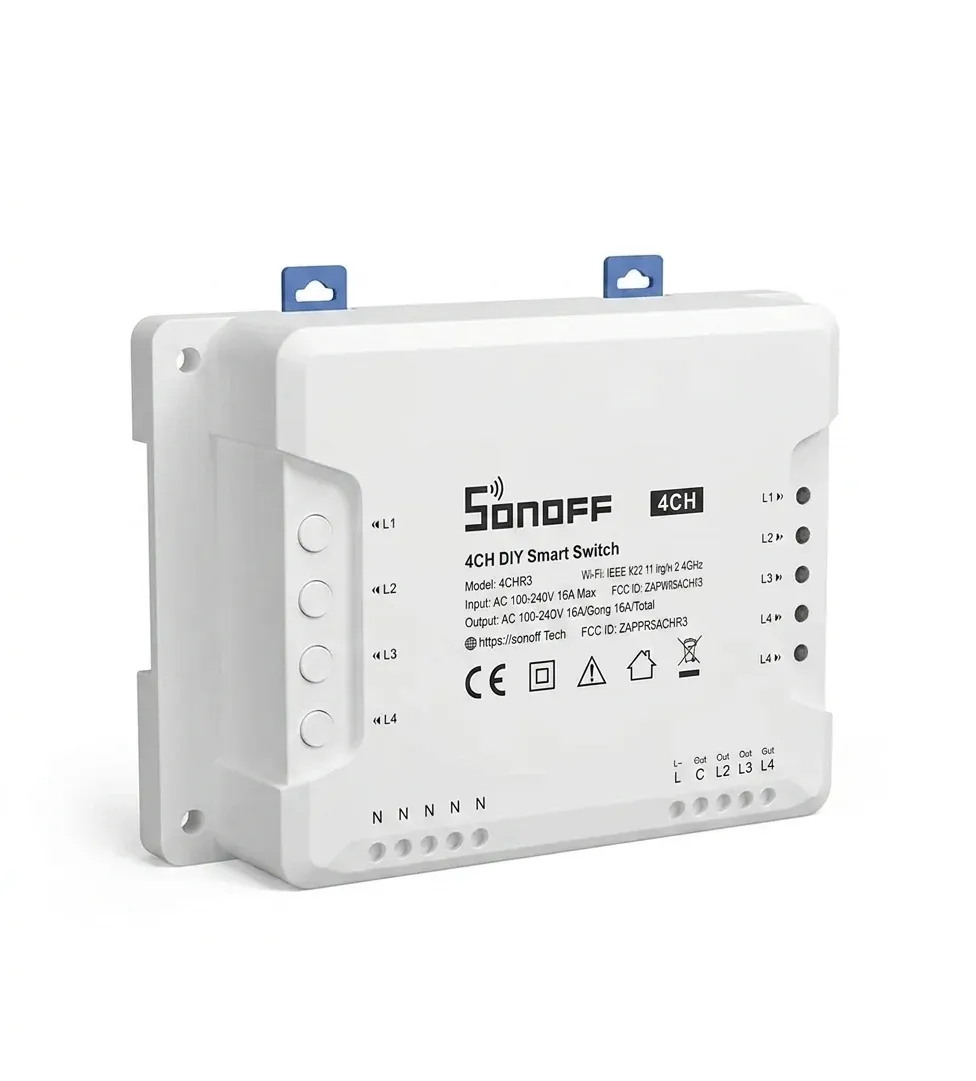














Four circuits in one box for cleaner smart-home upgrades
This relay module solves a common smart-home problem: how to control multiple lights or loads without installing separate switches for each one. With four independent gangs, it lets you manage several circuits from one compact unit, which is especially useful in utility rooms, workshop zones, and multi-light ceiling runs.
Sonoff has earned a strong reputation in the AliExpress smart-home niche because it focuses on practical hardware, broad app support, and clear documentation. The brand’s products usually appeal to users who want reliable automation parts rather than flashy gadgets, and this model follows that pattern.
What 10A per gang means in real use
Each channel is rated at 10A, with a total load rating of 2200W, so the module is better suited to lighting, fans, and moderate household circuits than heavy appliances. That makes it a sensible fit for segmented home lighting, garage lights, or controlled outlets where predictable switching matters more than raw power.
The 90V-250V AC input range and 802.11 b/g/n Wi-Fi support make it flexible for common residential installations, while WPA-PSK and WPA2-PSK security keep the connection aligned with standard home networks. In practice, this is the kind of relay that works best when the goal is stable control, not complex industrial automation.
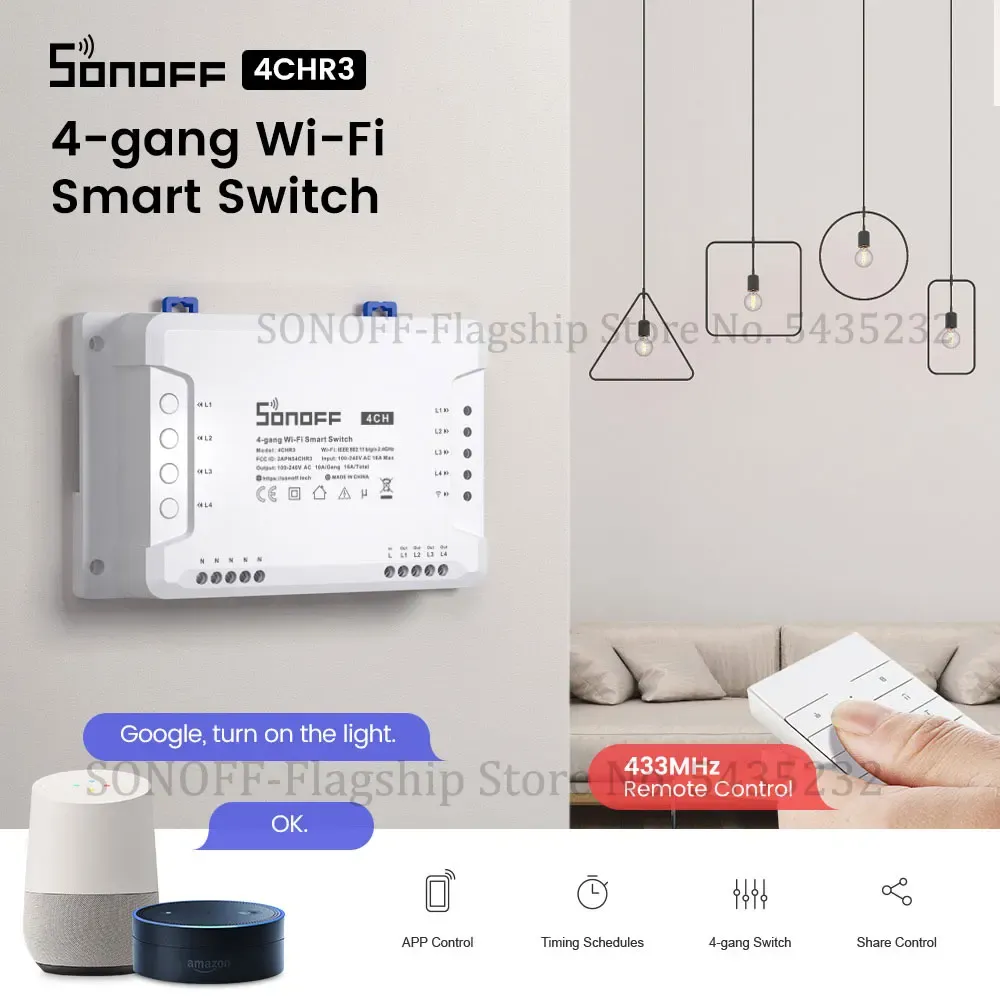
Installation style and enclosure details
The unit arrives ready to go, which reduces the setup burden for users who already know how to integrate a relay into an electrical box or control panel. Its fire-retardant ABS V0 enclosure is a meaningful safety detail, and the 145 x 90 x 40 mm footprint is compact enough for many retrofit projects without dominating the enclosure.
Because there is no battery and no included adapter, this is a hardwired component rather than a plug-and-play consumer accessory. That distinction matters: it is designed for people who want permanent automation, not temporary convenience, and the CE and FCC certifications support that positioning.
Where the four-channel layout pays off
The strongest use case is split control, such as one module handling bedroom lighting, stair lights, porch lighting, and a fan from a single installation point. Users also gain scheduling flexibility, so a timer can handle routine tasks like evening lighting scenes or morning startup sequences without manual switching.
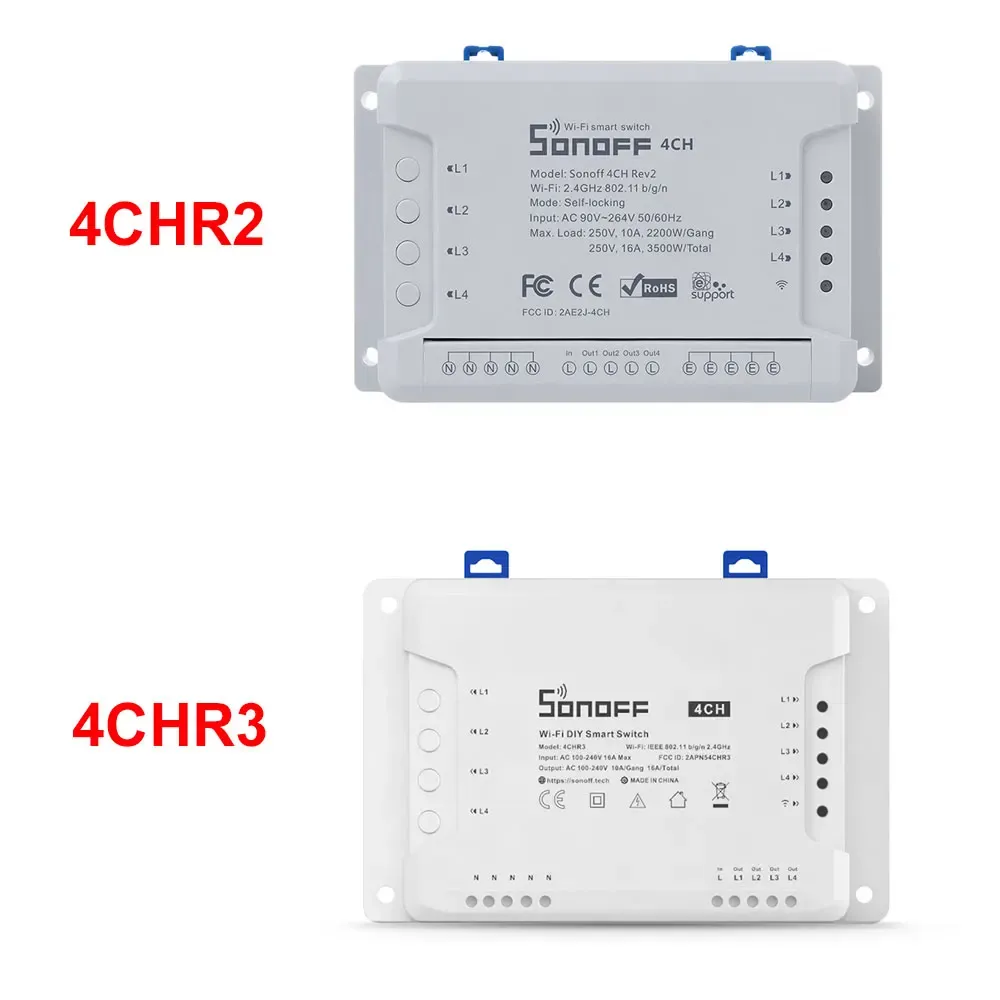
Real customer feedback is limited but encouraging, with a 4.7 average rating and comments pointing to fast delivery, solid build quality, and correct operation out of the box. One user reported durability concerns, which is worth noting for buyers planning frequent switching cycles or higher-load installations.
Who should consider it, and who should not
This model makes the most sense for experienced DIY smart-home users, electricians, and anyone retrofitting multiple circuits in one place. If you only need one light to go smart, a single-channel relay may be simpler; if you want four independent outputs in a tidy footprint, this unit is the more efficient path.
The main limitation is that the product details do not specify every integration scenario, so buyers should confirm wiring compatibility and load type before installation. That extra check is worth doing because the best results come when the relay matches the circuit, the enclosure space, and the intended automation style.