














A clean way to control lights without opening the wall
This Aqara D1 wireless wall switch solves a familiar smart-home problem: you want physical control in a room, but you do not want to run new wiring or replace every fixture. It works as a Zigbee-linked button controller, so the real advantage is convenience at the wall rather than electrical complexity.
Because it belongs to the Mijia ecosystem, it is aimed at users who already rely on Mi Home, Aqara Hub, or HomeKit-compatible setups. That makes it a practical fit for apartments, rental spaces, and retrofit projects where a tidy control point matters more than a full electrical overhaul.
What Zigbee changes in daily use
Zigbee is the key detail here, because it keeps the switch responsive while avoiding the load and clutter of a battery-heavy Wi-Fi button. In practice, that means a more stable smart-home control point as long as you have a compatible gateway nearby, which is the tradeoff behind the lower hardware complexity.
The switch is not designed as a universal standalone remote; it needs a Zigbee hub to unlock smart control. If your home already uses Aqara or Mijia devices, the setup feels cohesive, and the switch can become a dependable trigger for lights, scenes, or emergency actions.
Button control that feels closer to a real switch
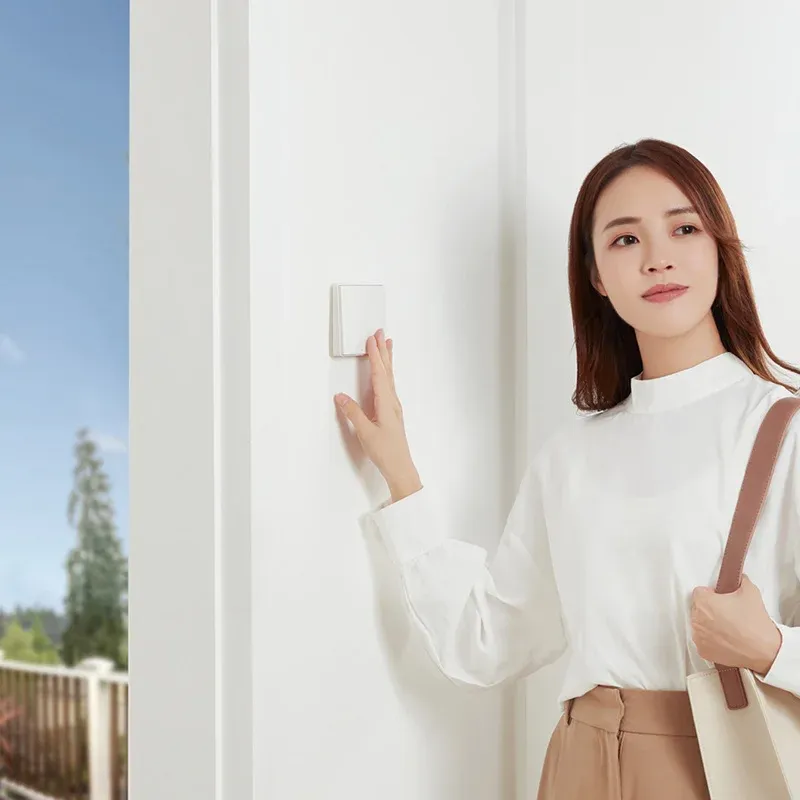
Unlike app-only lighting control, a wall-mounted button gives you fast access by touch, which matters when your hands are full or guests need an obvious control point. The compact format also helps it blend into a room without looking like a bulky smart accessory.
Users generally value this kind of switch for its simple behavior: press, trigger, move on. That simplicity is useful in bedrooms, hallways, and entry areas where you want the room to respond immediately, and it raises an important question about where it fits best in the home.
Two channels for practical scene control
The 2-channel design gives it more flexibility than a basic single-action button, especially for turning on different lights or triggering separate automations. In a smart-home routine, that can mean one press for main lighting and another for a night mode, which is more useful than a generic on/off remote.
Its listed flashing feature and emergency-oriented functions suggest it can also serve as a visible alert trigger in a connected setup. That makes it more versatile than a decorative wall button, especially if you want one controller to handle both lighting and safety-oriented routines.
Where it fits, and where it does not
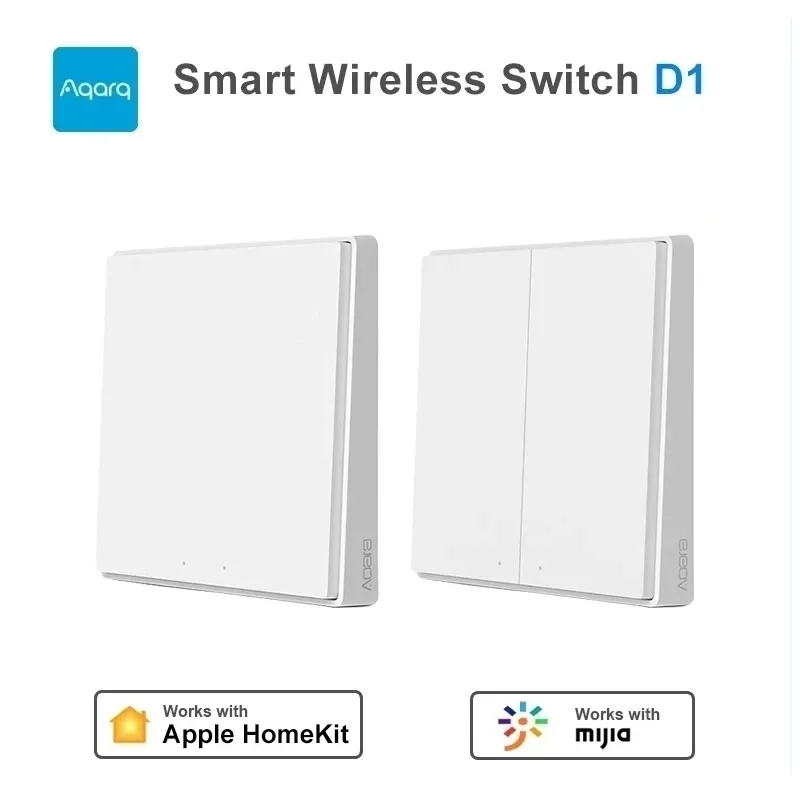
This is not the right choice if you need a wired replacement for a standard mains switch, because the wireless version is meant to work through a gateway and smart lighting ecosystem. It is better viewed as a control layer for Mijia smart bulbs and Zigbee-connected scenes, not as a universal electrical switch.
That limitation is also what keeps installation simpler, since the unit is powered by AC in the product data but the wireless key description and CR2032 note point to a system built around ecosystem pairing rather than complex wiring. According to customers, the appeal is strongest when the device is used exactly as intended inside an Aqara-based home, which is where it becomes easier to appreciate its value.
Build, certification, and buying confidence
The switch carries RoHS and CE certification, which gives basic reassurance for material compliance and market safety expectations. Aqara also lists an official-goods guarantee, fake-one-pay-ten protection, and a one-year warranty, which matters in a niche where compatibility and authenticity are often the main concerns.
For the current asking level, it sits in a sensible middle ground for a branded Zigbee accessory. If your setup already depends on Mi Home or HomeKit-linked Aqara hardware, this is the kind of small component that can make the whole system feel more natural to use, so the next question is whether your hub is already ready for it.