















Clear road evidence without cluttering the windshield
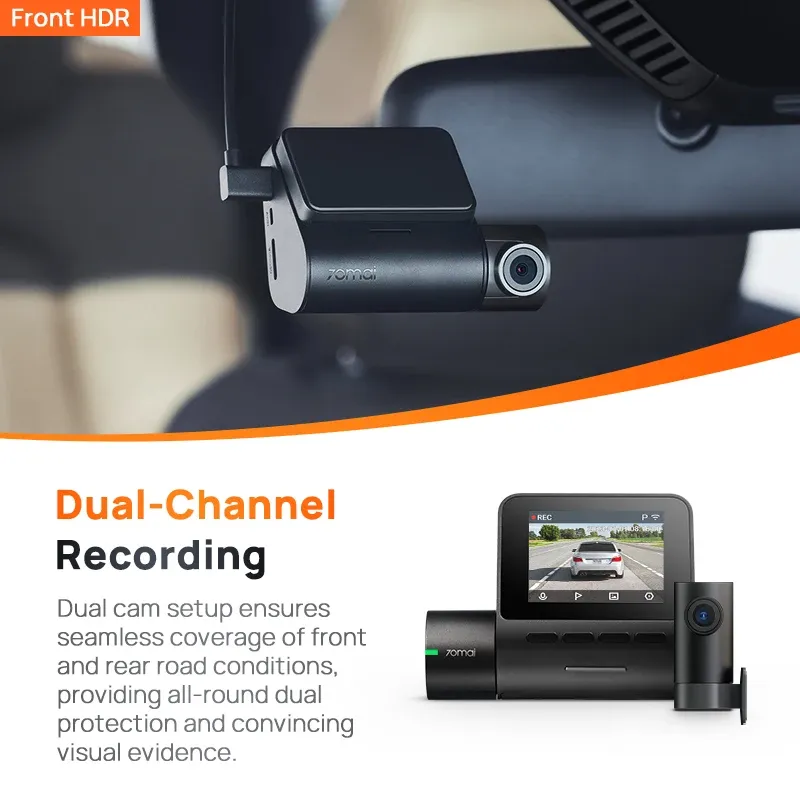
The 70mai A200 solves a familiar problem: you want reliable incident footage without a bulky camera blocking your view. Its compact body and 2-inch IPS screen keep the setup discreet, while the 130° lens captures enough of the lane ahead to make everyday driving more accountable.
At this level, the value is not in flashy extras but in dependable coverage that fits into a normal commuter car as easily as a weekend road trip setup. That balance is what makes it interesting for AliExpress United States shoppers looking for practical dash cam hardware, so how does it perform in the details?
1080P recording tuned for readable details
The A200 records at 1920x1080 and 30 fps in its standard mode, which is enough for license plates, lane position, and traffic flow in typical daylight conditions. The H.264 codec and MP4 format help keep files manageable, so loop recording can cycle through footage without wasting storage.
Users who need even more motion smoothness should note the HDR tradeoff: the product description says frame rate can drop to 30 fps when HDR is enabled, which is still practical for most daily driving. In real use, that means you are choosing between brighter balanced scenes and the fastest capture mode, which matters in changing light, doesn't it?
Night Vision and F2.0 optics for darker roads
The F2.0 aperture and NightShot function are the features that matter most after sunset, when low-light footage often becomes the weak point of budget dash cams. A wider opening lets more light reach the GC2093 sensor, giving the camera a better chance of preserving shape, movement, and road markings instead of turning everything into grainy blur.
That does not make it a premium night specialist, but it does move the A200 ahead of basic entry models that struggle once streetlights thin out. For drivers who commute early or return late, that extra clarity can be the difference between usable evidence and a dark clip, so what happens when the car is parked?
Parking monitor built for overnight peace of mind
With support for 24-hour parking monitoring and an optional hardwire kit, the A200 is designed to keep watch when the ignition is off. The built-in G-sensor can flag impact events, which is especially useful in parking lots where door dings and low-speed bumps are the incidents most drivers want recorded.
The optional rear camera expands the system into dual-channel coverage, turning the setup into a more complete incident recorder rather than a front-only witness. That flexibility is useful if you want to start simple and upgrade later, and the Type-C version is easier to match with the newer UP03 kit, which avoids interface confusion for first-time installers.
Small screen, simple controls, fast daily use
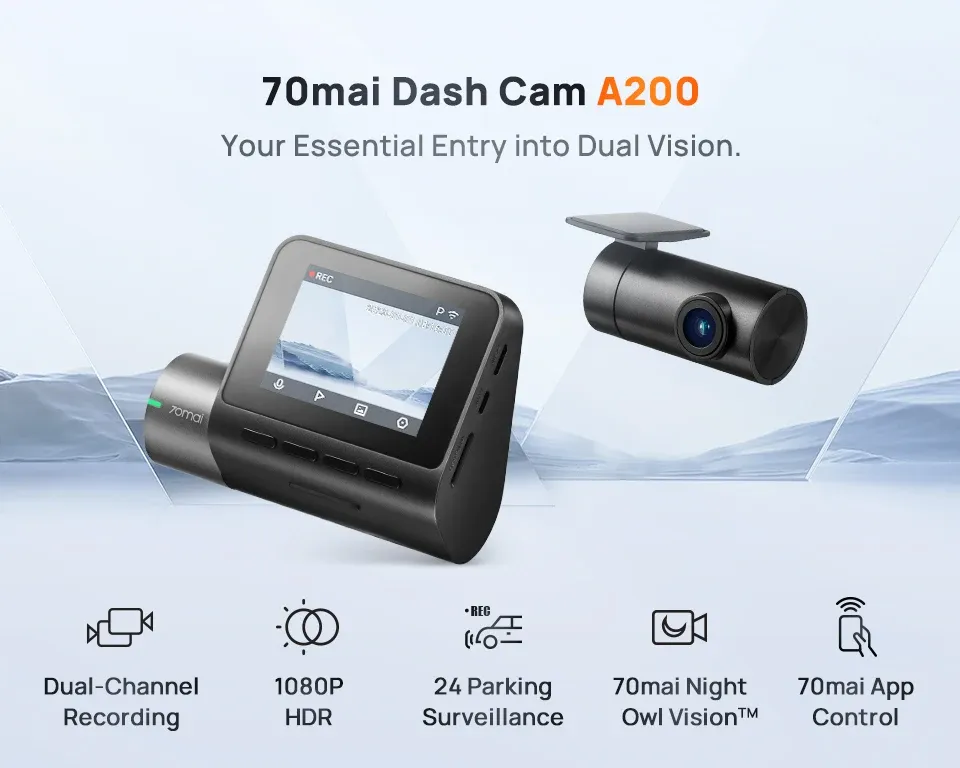
The 2-inch IPS display is not meant for cinematic playback; it is there for quick checks, menu navigation, and confirming the camera is recording. Because the screen is small and the unit is portable, it stays out of the way once mounted, which is exactly what many drivers prefer.
Audio recording, Wi-Fi support, and multilingual menu options make the A200 easier to live with than many bare-bones recorders in the same class. Real customer feedback is broadly positive, with repeated praise for quality, heat tolerance, and easy software use, though delivery speed appears to vary more than the hardware itself.
What matters before you install it
The camera uses a corded power design and requires a Class 10 microSD card up to 128 GB, so it is best treated as a proper installed device rather than a casual clip-on accessory. Its 500 mAh built-in battery is mainly for short backup use, not for long unplugged operation, which is normal for this category.
For drivers who want a compact recorder with parking support, dual-channel expandability, and a proven 70mai ecosystem, the A200 lands in a very usable middle ground. The strongest case for it is not one standout spec, but the way its core features line up around everyday protection, so the remaining question is whether you need the rear camera now or later?