

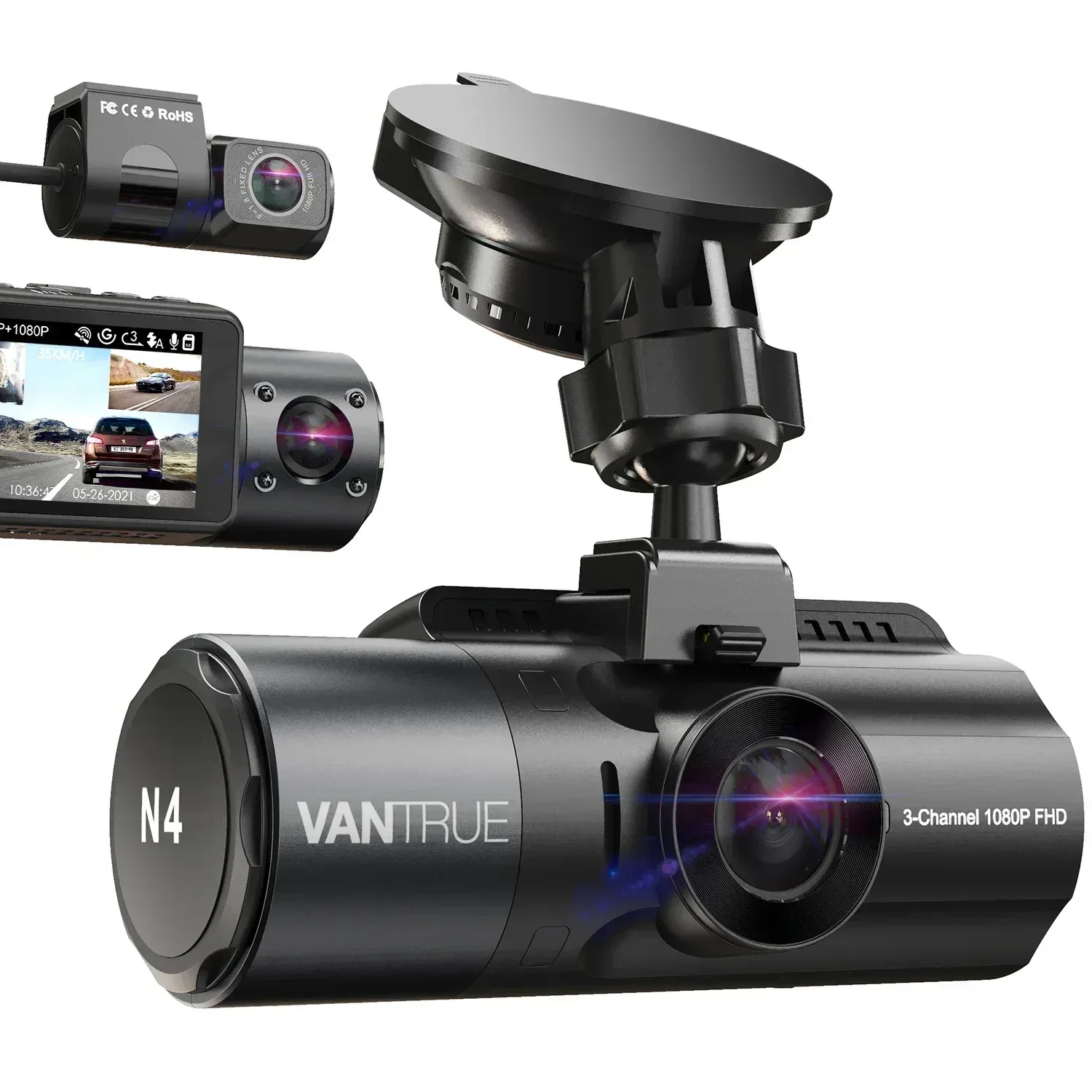












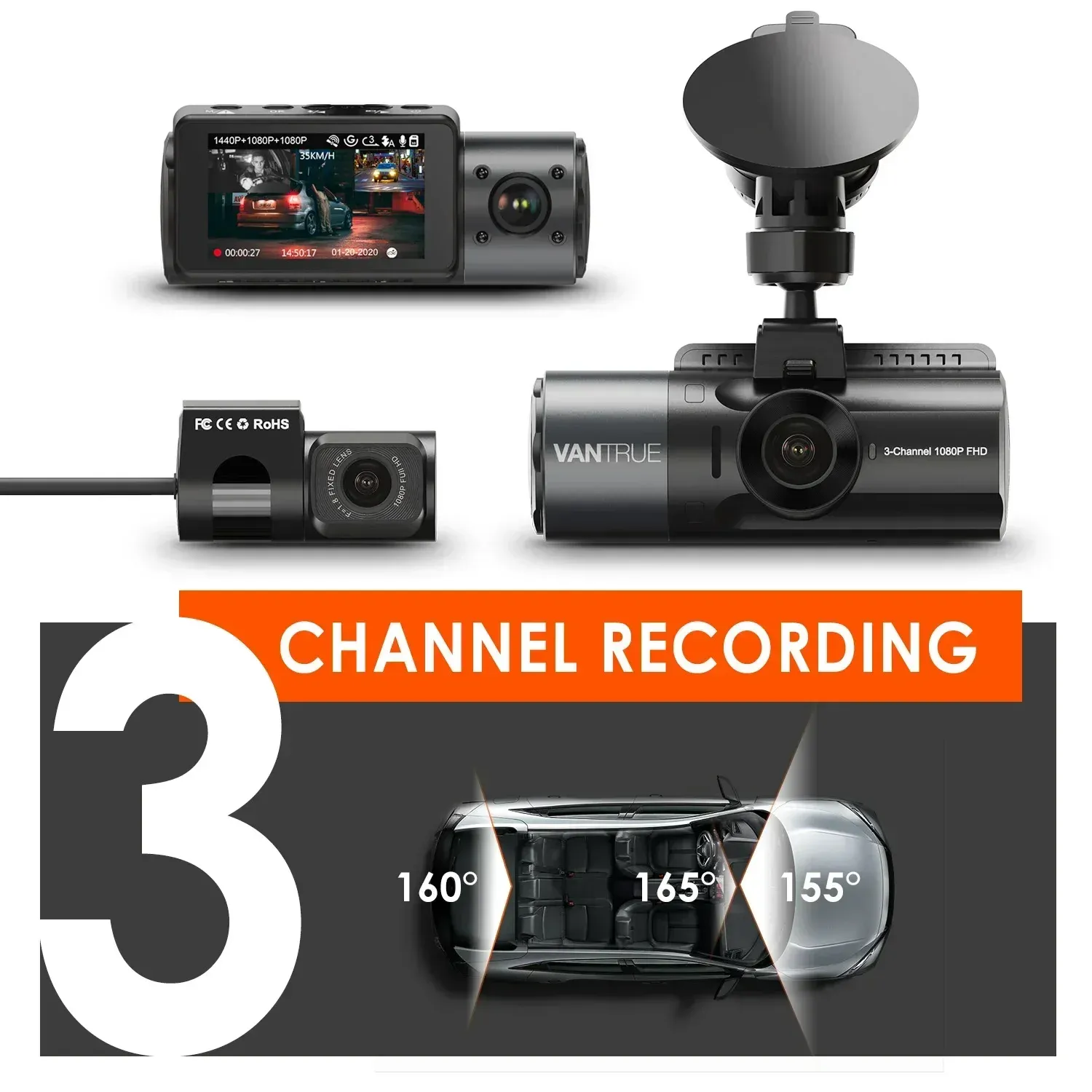
Three-way coverage that closes the blind spots
The Vantrue N4 solves a common dash cam problem: one camera rarely captures the whole story when an incident happens. Its 3-channel layout records the road ahead, the cabin, and the rear view, so you can document what happened from multiple angles without adding a second system.
That setup is especially useful for rideshare drivers, fleet vehicles, and trucks where rear visibility and interior activity matter as much as the front road scene. The appeal is not just coverage, but the ability to review a situation frame by frame with less guesswork, which is why the N4 stands out in the AliExpress dash cam segment through AliExpress United States.
4K front recording: where the detail shows up
In front-only mode, the N4 can record at 4K 2160P, which gives license plates, lane markings, and road signs a sharper look than standard 1080P units. When you switch to dual or triple-channel recording, the system balances resolution across cameras, which is a practical tradeoff for drivers who need broad evidence more than cinematic footage.
The real benefit is flexibility: you can run the camera in the mode that matches your route, your vehicle, and how much storage you want to use. If your priority is capturing distant details on highways, the 4K front channel is the part that matters most, so how does it behave after dark?
Night vision tuned for real driving conditions
Vantrue pairs a Sony STARVIS sensor with a wide F1.4 front lens and F1.8 rear lens, a combination designed to pull in more light when streets get dim. That matters in parking lots, late-night deliveries, and unlit roads, where a brighter image can reveal shapes, plates, and movement that softer cameras miss.
Users often value this kind of low-light tuning because it reduces the washed-out look common in cheaper recorders. The image still depends on street lighting and windshield cleanliness, but the hardware gives the camera a stronger starting point, which becomes even more important once GPS data is added.
GPS data that makes footage easier to use
The included GPS player helps place speed and route information alongside the video, which is useful when you need to explain where a clip was recorded and how the vehicle was moving. That extra context can be more persuasive than footage alone, especially in disputes involving lane changes, rear impacts, or delivery timing.
For drivers who keep logs for work, GPS also makes it easier to match recordings with a route history on a computer. The camera supports Windows and Mac systems, so reviewing files is straightforward, and the next practical question is whether the storage setup is demanding.
MicroSD requirements and what they mean in practice
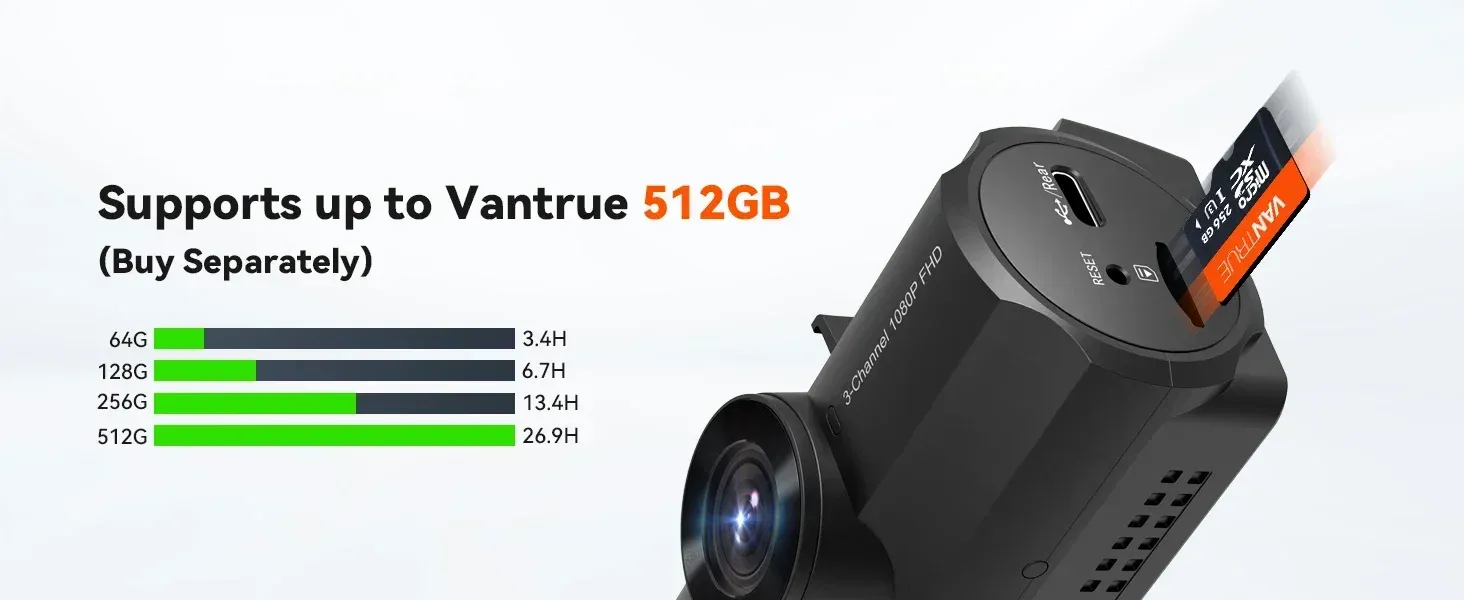
The N4 uses Micro SD cards rated U3 or higher, with support up to 256GB, which is the right class for multi-channel video writing. Lower-grade cards can struggle with sustained recording, so this spec is less about marketing and more about avoiding corrupted clips or dropped frames.
That requirement does add a small ownership cost because you will want a high-endurance card rather than a basic one. The upside is stability, and with a Type-C USB port, the camera fits more modern power and data habits than older mini-USB dash cams.
Best fit: trucks, rideshare cars, and daily commuters
The N4 makes the most sense for drivers who need proof, not just a front-facing view. Truck owners, rideshare operators, and commuters who park in busy areas get the biggest benefit from the cabin and rear channels, since those angles can clarify passenger disputes and rear-end events.
Its three-camera design does make installation and cable routing more involved than a single-lens dash cam, so it suits buyers who value coverage over simplicity. If you want a recorder that behaves like a rolling evidence system rather than a basic driving camera, this one is built for that role.
What to watch before setting it up
The N4 is strongest when paired with the right accessories and a careful install, because multi-channel recording depends on clean cable management and correct camera placement. A poorly aimed rear camera or a weak memory card can waste the advantages of the hardware, so setup matters more here than on simpler models.
It is also worth noting that the product description mentions customs clearance and import charges, which can affect the final ownership experience. That does not change the camera itself, but it is part of the practical picture for international marketplace shoppers who want fewer surprises.