












Built for detail work, not brute force
This mini drill is aimed at jobs where control matters more than raw size, such as engraving, polishing, and trimming small parts. Its corded 230W motor and variable speed range make it a practical match for jewelry, PCB work, wood accents, and light metal finishing.
At 0.8 kg, it feels substantial enough to stay steady in the hand without becoming tiring during longer sessions. That balance is useful when you need a clean line or a smooth edge, and it sets up the question of how well the speed control supports those finer tasks.
What 5,000 to 31,000 rpm means on the bench
The speed range is the main reason this tool stands out in the AliExpress hand tools aisle. Lower speeds help with polishing and controlled surface work, while the upper range is better suited to cutting, grinding, and engraving harder materials.
Real customer feedback suggests the motor feels strong for the class, though some users noted that the top speed is more realistic on stable mains power than on underpowered setups. That is an important clue if you plan to use it for long sessions, because the next detail affects versatility just as much.
Universal chuck versus a classic collet system
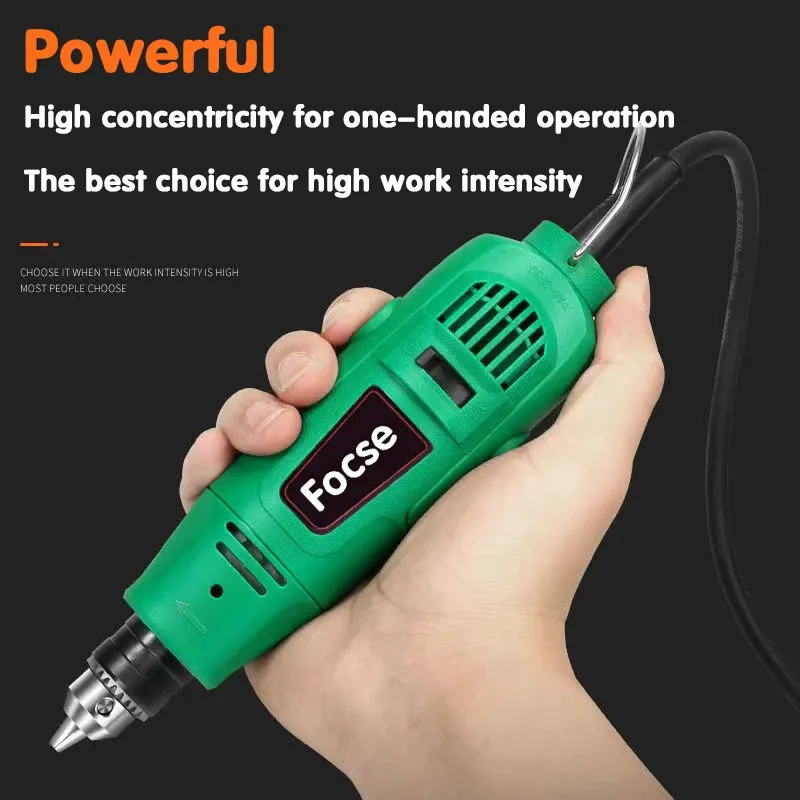
The 0.6 to 6.5 mm chuck opens the door to a wider mix of bits than a narrow collet setup, which is handy if your accessories vary in stem diameter. It is especially useful for makers who move between grinding points, small drills, and polishing heads without wanting to swap hardware constantly.
The trade-off is size: a chuck usually adds a little bulk compared with a slimmer precision collet tool. For most home DIY users, that is a fair exchange for convenience, but if you work on very delicate jewelry micro-details, the next point matters even more.
How it handles wood, metal, stone, and PCB tasks
FOCSE positions this model for emerald, crystal, jade, agate, metal, wood, and PCB applications, and that broad material list reflects its real strength: adaptable finishing. Users report it handles stripping, cutting, and light shaping well, which makes it a flexible bench companion rather than a single-purpose engraver.
The built-in cooling fan and porous heat dissipation design are useful in practice because smaller rotary tools can get warm quickly under load. That cooling support, combined with the copper motor and double-bearing layout, suggests a tool designed for steadier output than the cheapest no-name mini drills, so what about day-to-day usability?
What the user experience feels like
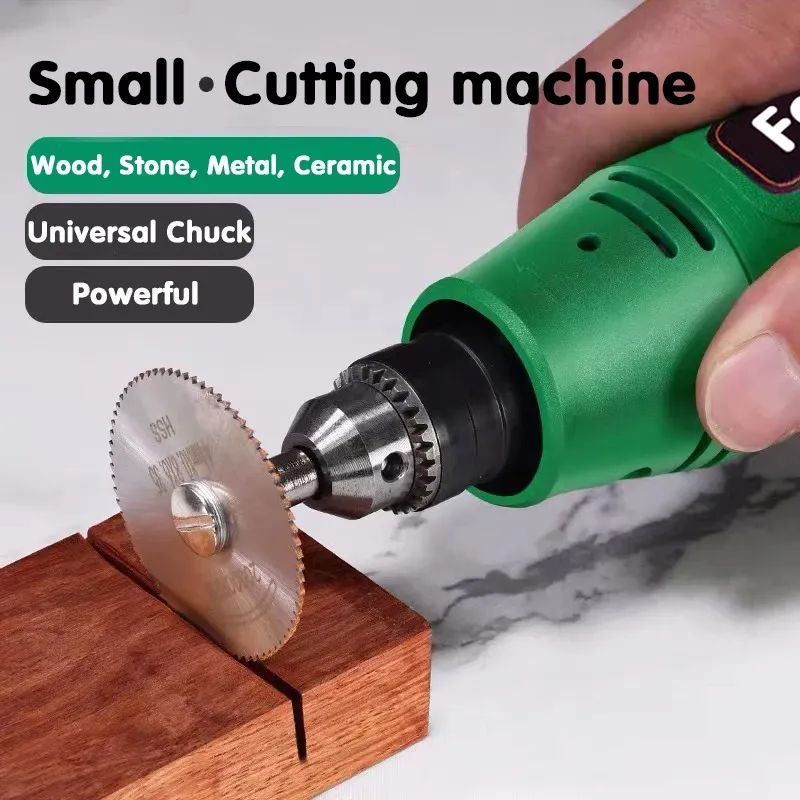
The grip is described as comfortable, and the machine’s stable output helps reduce the wobble that can ruin a polished edge or a precise cut. According to customers, the tool has earned a solid 4.6/5 rating across 168 reviews, with repeated praise for sturdiness and overall quality.
The main caution is not performance but configuration, because this listing ships as an EU/220V unit by default and may require a converter for U.S. use. That makes it a strong fit for makers who already understand plug and voltage compatibility, which leads to the most practical buying question of all.
Best use cases for an affordable workshop rotary tool
This is a good fit for hobbyists who want one corded tool for engraving, polishing, cutting, and light drilling on mixed materials. It is less appealing as a travel tool or as a plug-and-play U.S. desktop solution, but for a fixed bench setup it offers a lot of capability for the class.
- Use low speed for polishing and finishing.
- Use higher speed for engraving and cutting.
- Check plug and voltage compatibility before setup.
- Expect a wider bit fit thanks to the universal chuck.
- Keep it for light to medium DIY, not heavy drilling.