











Compact power for controlled cutting and sanding
This DEKO angle grinder solves a familiar workshop problem: you need enough power for real material removal, but not a bulky machine that feels hard to guide. With an 800W motor, a 115mm disc, and a 1.65kg body, it sits in the useful middle ground for home workshops, repair benches, and light fabrication.
The corded 220-240V design keeps output steady, so the tool does not depend on battery condition or charge level. That makes it a better fit than cordless compact grinders when the job lasts longer than a few minutes, but how does that translate in daily use?
What the 11,000 rpm speed changes in practice
The 11,000 rpm no-load speed matters most when you want a cleaner cut line and quicker wheel response on thinner stock. It also helps the grinder stay lively on sanding and deburring tasks, where a slower machine can feel sticky or underpowered.
Users note smooth startup and stable running, which is important on a small grinder because vibration becomes tiring fast. According to customer feedback, the gearbox stays relatively quiet and the tool feels balanced, which suggests DEKO focused on control rather than raw aggression.
115mm disc size: the right compromise for tight spaces
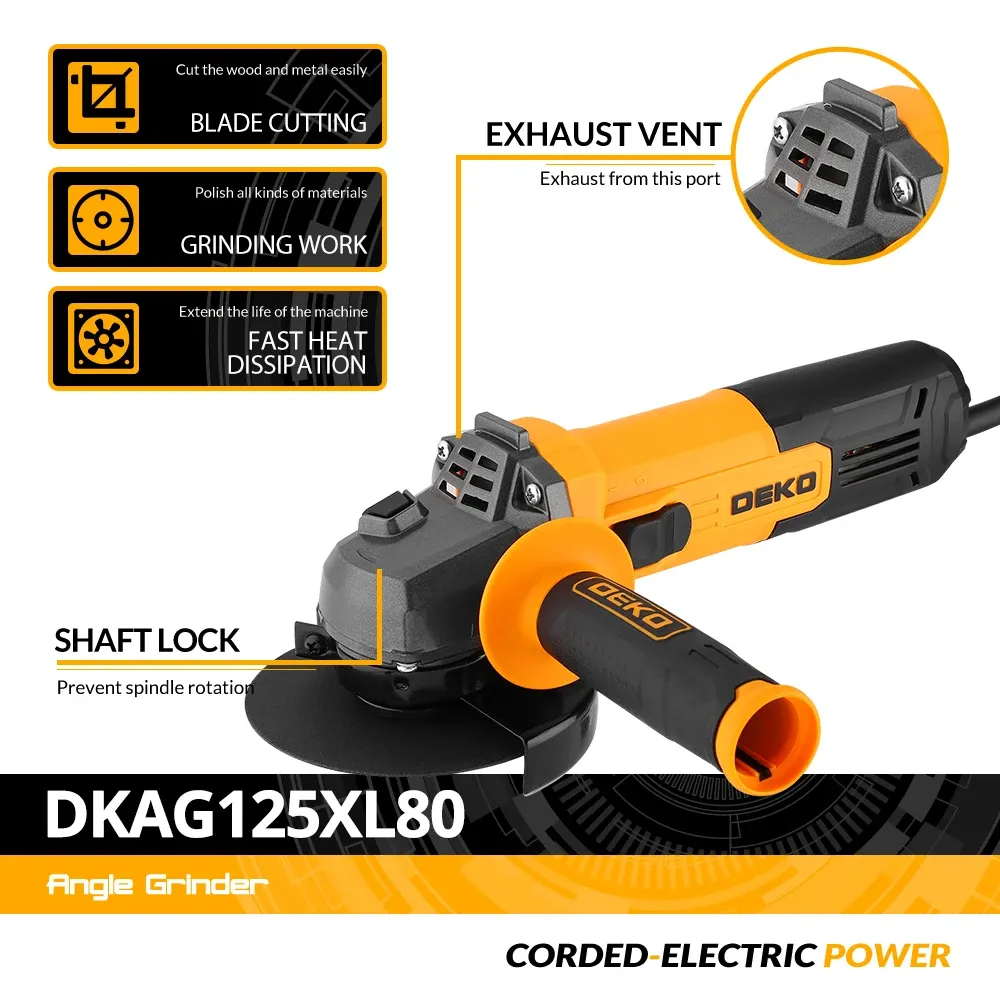
A 115mm disc is smaller than the common 125mm format, and that difference is easy to feel when you are working near corners, brackets, or welded joints. The smaller head gives better visibility of the cut path and helps you keep the tool closer to the work surface without awkward wrist angles.
This size is especially useful for metal trimming, light rust removal, and wood sanding with the right accessory, where precision matters more than deep cutting capacity. If your tasks include heavy rebar or large structural steel, a larger grinder would be more appropriate, which is exactly where this model draws its line.
Build feel and handling during longer sessions
At 1.65kg, the grinder is light enough to move quickly across a seam, yet substantial enough to feel planted in the hand. That weight helps reduce the twitchy sensation cheaper ultra-light grinders can have when the disc first bites into metal.
The M14 spindle thread keeps compatibility broad for common accessories, so sourcing discs and wheels should be straightforward. The 2-meter cord mentioned by users is not unusually long, but it is practical for bench work and small job sites, and it avoids the awkward tug that short leads create.
What customers liked most, and where to stay realistic
Customer comments consistently point to smooth start-up, neat packaging, and a solid first impression, with several users saying it arrived intact and worked immediately. The most repeated caution is that the switch can feel stiff when new, which is common on fresh tools but still worth knowing before you expect a feather-light trigger.
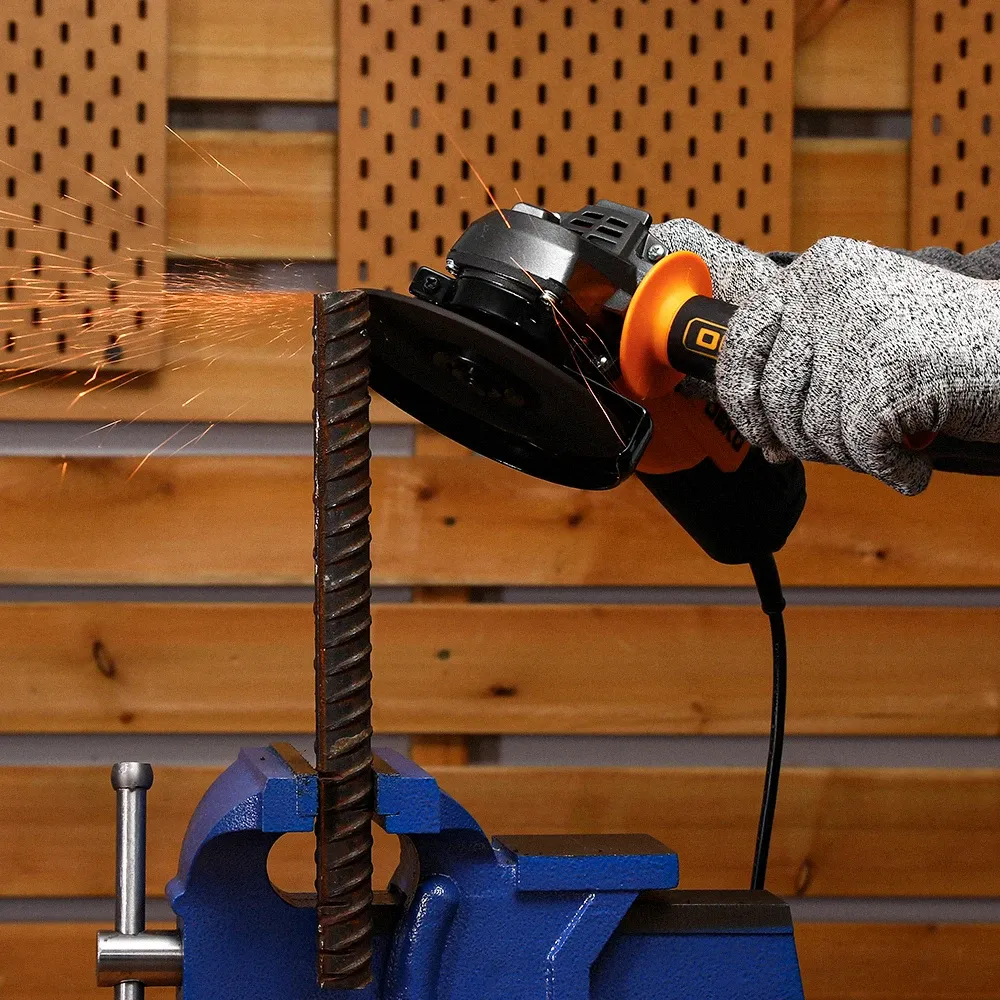
There is also a clear limit to its role: this is a grinder for small-to-medium jobs, not a replacement for a heavy-duty industrial unit. That makes it a smarter match for repair work, home metal prep, and occasional cutting than for continuous high-load fabrication, so what should you check before choosing it?
Best-fit jobs in a small workshop
For the right user, this model covers a lot of ground with one machine: trimming bolt heads, cleaning welds, sanding rough edges, and refreshing worn metal surfaces. It can also handle wood-related grinding and sanding tasks when paired with the correct accessory, though that use case demands more care and dust control.
- Light metal cutting and edge cleanup
- Rust removal and surface preparation
- Deburring after fabrication work
- Occasional sanding with compatible discs
- General repair tasks in a compact workshop
Its CE certification and mains-powered design make it feel like a straightforward workshop tool rather than a novelty gadget, and that simplicity is part of the appeal. If you want a grinder that is easy to understand, easy to equip, and easy to keep ready, the next question is whether the accessory set you already own will match the M14 spindle.