








Cleaner voice for mobile video, without the cable clutter
The HOCO L20A solves a familiar problem in mobile content creation: the camera is ready, but the voice sounds distant, thin, or full of room noise. This dual wireless lavalier setup is designed to place the microphone close to the speaker while keeping the recording path simple for iPhone, Android, and supported camera workflows.
Hoco has built a strong reputation in the AliExpress niche by focusing on practical accessories with straightforward hardware design, and this product follows that approach. The brand usually appeals to users who want accessible gear that feels more organized than no-name alternatives, which makes the L20A worth a closer look, especially for everyday creators.
What the dual-mic format changes in practice
With two microphones in the kit, the L20A is better suited to interviews, product demos, and co-hosted live streams than a single-lavalier model. That matters because omnidirectional pickup can sound natural when the mic is clipped correctly, but it also rewards close placement and a quiet recording environment.
The advertised DSP noise reduction should help reduce low-level background distractions, though it will not replace a full studio signal chain. In practical terms, it is the kind of processing that can make speech easier to follow in a kitchen, office, or street-side clip, which is exactly where many short-form videos are recorded.
Type-C and Lightning support for fast setup
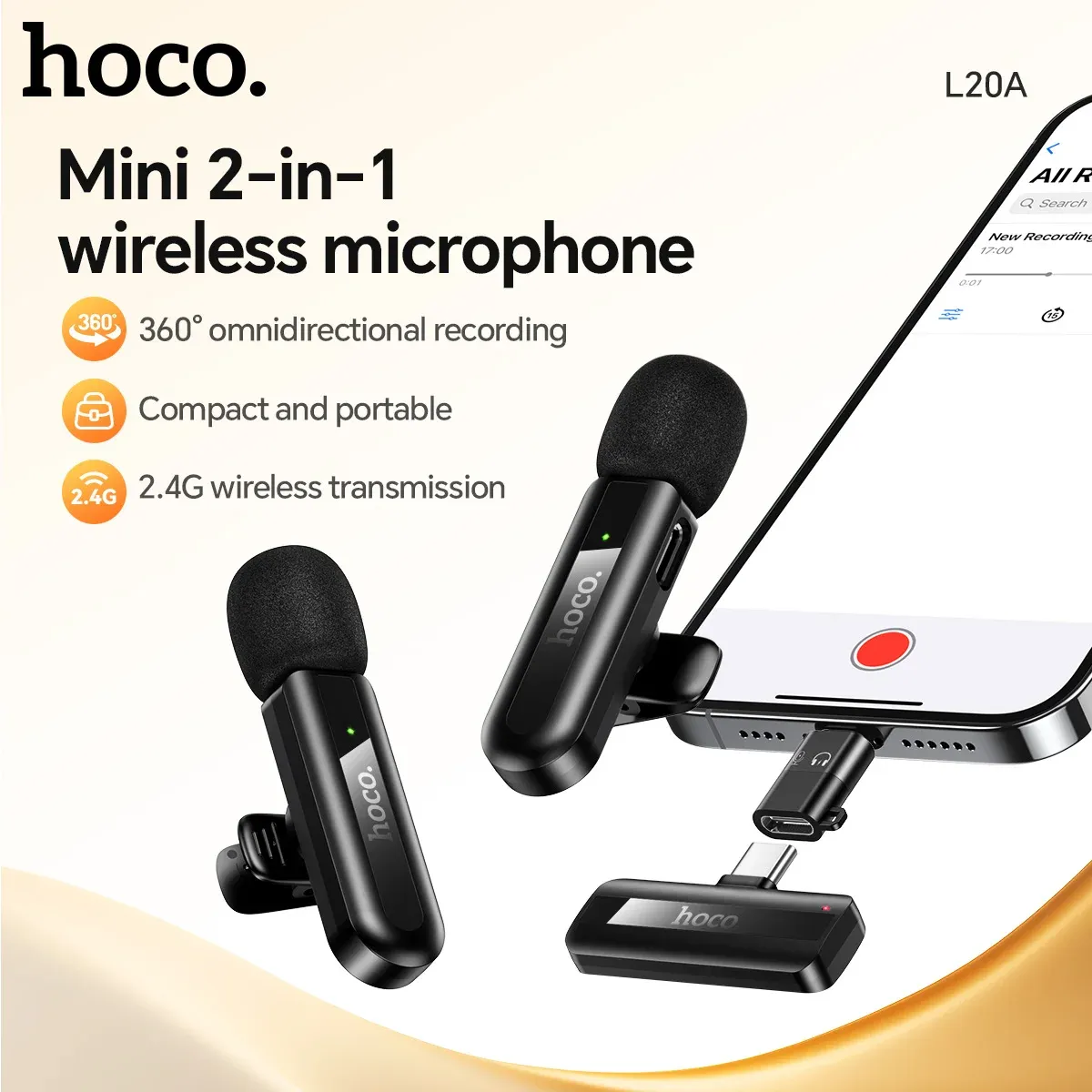
The receiver is offered in Type-C and Lightning versions, so the system can slot into current phone setups without adapters in many cases. Type-C support is especially relevant for Android creators using Huawei, Xiaomi, OnePlus, and some Samsung models, while Lightning keeps older iPhone and iPad workflows simple.
That plug-and-play style is valuable for live streaming and vlogging, where setup time matters as much as sound quality. If you switch devices often, the receiver format is the detail that determines whether this mic feels convenient or slightly restrictive, so compatibility should be checked before you get started.
Battery life that covers a short shoot
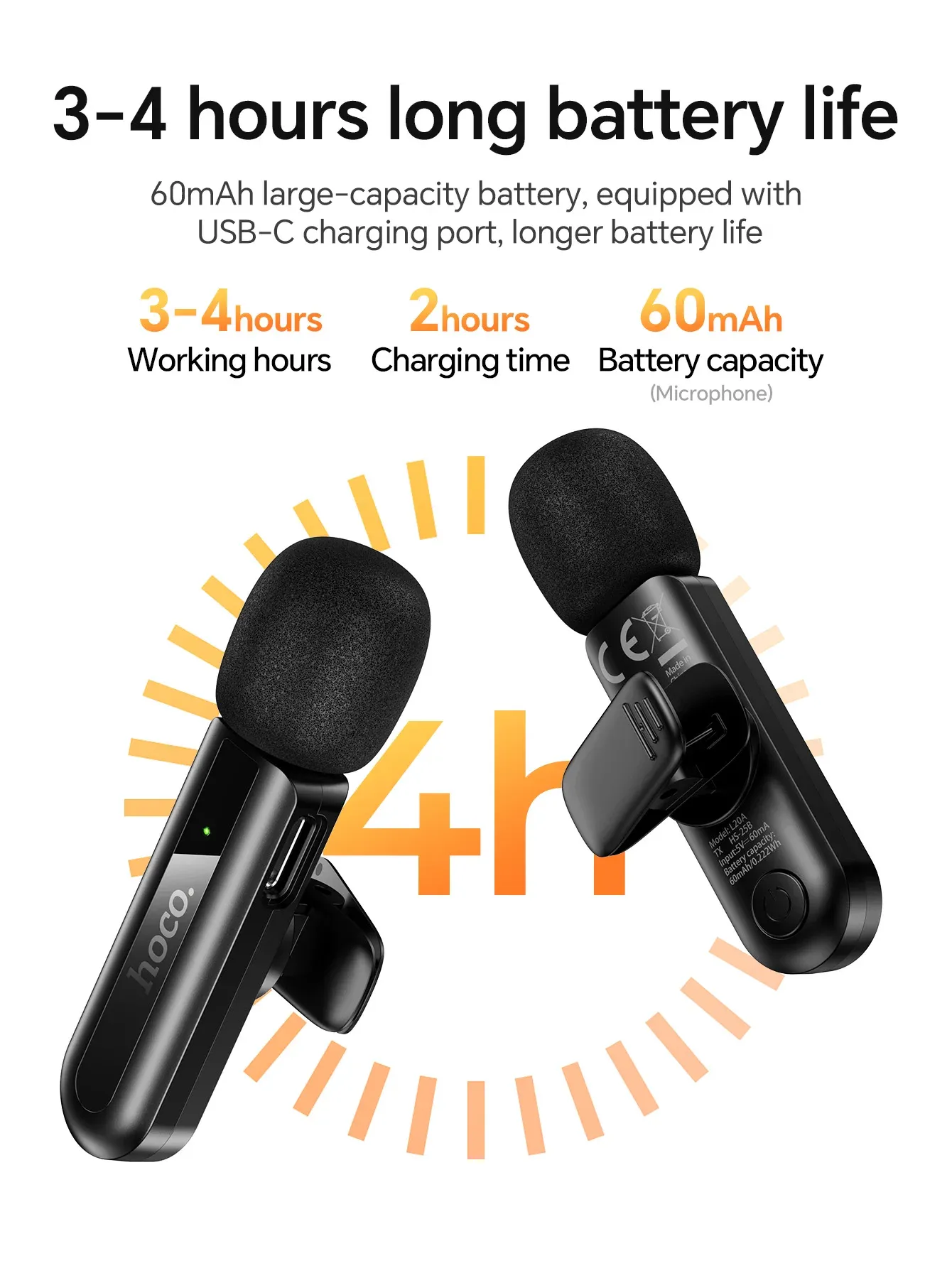
Each microphone carries a 60mAh battery, with a claimed 2-hour charging time and 3 to 4 hours of use. That runtime is enough for a class, a product walkthrough, or a compact live session, but it is not built for all-day field recording without a recharge break.
The low weight is one of the more appealing parts of the package: the microphones are listed at just 7.5g each, so they should sit lightly on clothing and avoid the heavy pull that can make lapel mics feel awkward. For creators who move between talking-head clips and quick on-location takes, that small footprint can be the difference between using the mic regularly and leaving it in a drawer.
Where it fits against pricier wireless kits
Compared with premium wireless lav systems, the L20A is more of a practical entry point than a broadcast tool. Users looking for stronger isolation, longer battery life, or more advanced monitoring will likely need to move up the category, but the price-to-function balance here is still sensible for casual and semi-regular use.
Real user feedback is limited and mixed, with one customer praising the unit and another reporting unclear sound, so expectations should stay grounded. The hardware idea is solid for the segment, yet the result will depend heavily on clipping position, phone compatibility, and how noisy the recording space is, which is exactly where the next buying question starts.
Who gets the most value from it
This microphone makes the most sense for creators who need a compact voice upgrade for social video, live selling, tutorials, or interviews recorded on a phone. It is less compelling for users who want studio-grade isolation, but for lightweight mobile production it offers a useful combination of dual-mic flexibility and simple connectivity.
If your workflow is built around fast setup and short sessions, the L20A delivers the essentials in a small ABS body that is easy to carry and quick to deploy. The real test is not the spec sheet alone, but how well it fits your recording habits, and that is where its strengths become clearer.